


3. Social information
Introduction
This section covers the impacts, risks, opportunities, governance, policies, actions, and results of Deloitte's identified material social topics(refer to page 98 for an overview of all our material topics). Unless otherwise indicated, the information in paragraphs 3.1, 3.2, 3.3 and 3.4 pertains to all people in our own workforce.
In line with the ESRS, we will describe the processes to identify and assess material impacts, risks and opportunities for the social sustainability matters not in scope of our reporting due to a lack of materiality.
Table 11: Materiality processes and considerations with regard to non-material social sustainability matters
|
ESRS |
Topic |
Processes and considerations |
|
S3 |
Affected communities |
Office locations were screened for possible impacts on host communities. As all our offices are based on industrial estates, there are no conflicts with communities’ economic, social and cultural rights. Communities’ civil and political rights and rights of indigenous peoples are less relevant in the Dutch operating context |
|
S4 |
Consumers and end-users |
We are a professional services provider and operate in a business-to-business environment |
General information
Table 12: Employee head count in 2025/2026
|
Male |
Female |
Other/Non-disclosed |
Total |
|
|
Deloitte Netherlands |
4,086 |
3,188 |
N/A |
7,274 |
|
Deloitte Dutch Caribbean |
33 |
55 |
N/A |
87 |
|
Total |
4,119 |
3,242 |
N/A |
7,361 |
Table 13: Employees by contract type, broken down by gender (head count) in 2025/2026
|
Male |
Female |
Other |
Non-disclosed |
Total |
|
|
Permanent employees |
3,613 |
2,744 |
N/A |
N/A |
6,357 |
|
Temporary employees |
506 |
498 |
N/A |
N/A |
1,004 |
|
Non-guaranteed hours employees |
N/A |
N/A |
N/A |
N/A |
N/A |
Deloitte does not have non-guaranteed hours employees hence we marked this as not applicable (N/A) in the table above.
Table 14: Part-time and full-time employees by region and gender (head count) in 2025/2026
|
Region |
Female |
Male |
Total |
|
Netherlands |
3,188 |
4,086 |
7,274 |
|
Full-time |
2,392 |
3,628 |
6,020 |
|
Part-time |
796 |
458 |
1,254 |
|
Dutch Caribbean |
55 |
33 |
87 |
|
Full-time |
41 |
29 |
70 |
|
Part-time |
14 |
3 |
17 |
|
Total |
3,242 |
4,119 |
7,361 |
Table 15: Employee turnover
|
2025/2026 |
2024/2025 |
|
|
Headcount |
1,683 |
1,363 |
|
Turnover rate |
22.9% |
17.7% |
Next to the 7,361 direct employees listed above, Deloitte also cooperates with contractors. Most of the contractors that we use are independent specialists who contribute to the success of our businessprovide by providing their time, knowledge and experience to our service delivery or are assigned to our Enabling functions. In 2025/2026, contractor hours for Deloitte excluding DDC amounted to approximately 338,274 hours, the equivalent of 183.8 FTE based on 1,840 hours per FTE.
Our Global Principles of Business Conduct define our behaviours, including on how we approach each other within Deloitte. They contain provisions on many areas relevant to our social impacts, such as respect, diversity and fair treatment, and professional development and support. They equally apply to our own workforce and to contractors and staff hired through employment agencies.
Grievances and misconduct can be reported through Deloitte SpeakUp, a confidential hotline, and where applicable via the Deloitte complaints procedure. Our non-retaliation policy ensures that anyone who, in good faith, raises an ethics, compliance or related concern, or who assists in an investigation, is protected from retaliation. Reported grievances and misconduct are primarily handled by our Ethics team.
There are no collective bargaining agreements that pertain to employees of Deloitte. For social dialogue, we have Works Councils on business and overarching levels, next to other forms of employee engagement, such as town halls, focus groups, surveys and one-on-one conversations. The central Works Council of Deloitte represents the interests of Deloitte employees during discussions with the Executive Board. For topics related to, for example, privacy legislation or working conditions, the Executive Board seeks approval from the Works Council. Our CHRO is responsible for dialogue on employment matters. The Works Council does not have a formal role in the establishment of targets. However, as part of an open and transparent dialogue, targets are disclosed to the Works Council and where needed, performance is discussed. In addition, views are exchanged on lessons or improvements as a result thereof.
3.1 Employee value proposition
Key results

Material impacts, risks and opportunities
In our Double Materiality Assessment as published on pages 93-98, we have identified the following material IROs for Employee Value Proposition:
-
Positive impact on society, driving economic growth by providing good reward packages;
-
Positive impact on employees due to personal and professional development increasing employability, and on society by improving the skills pool;
-
Risk to business performance and reputation related to a lack of work-life balance and its negative impacts on employees.
Our related activities contribute to the following SDGs:

Governance
The Talent Strategy FY27 provides the foundation for our Employee Value Proposition (EVP) and guides Deloitte’s approach to workforce planning, leadership development and inclusion. It rests on four core pillars:
-
Future-ready workforce: creating the right mix of local staff, contractors and colleagues in our Global Delivery Network, and integrating artificial intelligence to improve agility and productivity.
-
Inclusive and thriving culture: embedding Diversity, Equity and Inclusion (DEI) through targeted recruitment, Executive Committee sponsorship for under‑represented talent, development programmes and reverse mentoring.
-
Inspiring leadership and growth: enabling employees at all levels to build leadership skills aligned to Deloitte’s 3C model — Courage, Compassion and Curiosity.
-
Seamless people experience: improving end‑to‑end employee journeys through digital innovation, process optimisation and a consistent focus on wellbeing and continuous development.
The Chief Human Resources Officer (CHRO) leads implementation of the EVP, supported by talent teams including Talent Acquisition; Performance and Rewards; Learning and Development; and DEI & Leadership Development. The Talent Strategy is reviewed regularly to ensure it remains aligned to our sustainability objectives and the evolving needs of our workforce. The CHRO is accountable for delivery, with regular oversight from the Executive Board.
Policies
Deloitte’s EVP addresses all three IROs mentioned above. It comprises of the following main policies:
-
Compensation, benefits and pension policy (IRO 1);
-
Performance, development and reward policy (IROs 2 and 3).
Both policies are available to all employees via DeloitteResources, our intranet, and My Benefits My Choice, our flexible benefits portal. The EVP is organised around three core principles that shape the people experience at Deloitte:
Passion for Purpose | Work goes beyond business - it creates positive impact for clients, colleagues and society. People at Deloitte help solve complex challenges and drive meaningful change, fostering ambition, innovation and a shared commitment to making a difference.
Be the true you | We value everyone. Each employee’s strengths, perspectives and ideas are recognised in a culture of inclusion, psychological safety and wellbeing, enabling people to thrive both professionally and personally.
Never stop growing | Growth is central to our talent experience. Employees develop technical expertise and leadership skills and gain global exposure through meaningful work, collaboration and structured learning. Curiosity and ambition are actively encouraged.
The EVP is supported by the Employee Ambition, which consists of seven elements:
1. Meaningful and challenging work
We ensure employees undertake challenging work that contributes to a wider purpose. Through Project Canvas sessions, people gain a clear understanding of how their work benefits clients and society. We gather feedback after projects to ensure engagements are stimulating and rewarding.
Our Social Hiring programme, supported by partnerships with external organisations that promote diverse and inclusive employment, reinforces our commitment to creating meaningful career opportunities for a broad range of talent.
2. Supported performance
Our performance management cycle is fair, transparent and development-focused. We cultivate a strengths-based culture in which colleagues receive ongoing coaching and continuous feedback, rather than relying solely on annual appraisals.
My Career Track, our digital platform for recording Growth Portfolios, tracking progress and requesting feedback, remains central to structuring performance conversations and linking day-to-day development with longer-term career goals.
Our learning and development curriculum supports colleagues to build the skills they need to perform and progress. Our Shared Values and Talent Standards underpin this approach, ensuring fairness, transparency and integrity.
3. Positive work environment
We are committed to an inclusive, flexible and professional workplace. This year we focused particularly on culture and integrity, reinforcing the standards and behaviours we expect of everyone and ensuring our workplace reflects our values in practice. We continue to prioritise psychological safety and inclusive leadership so that all voices are heard. Through reverse mentoring, senior leaders gain insights from colleagues with diverse backgrounds.
Our flexible working policies let employees choose where and when they work best, including office-based, remote or hybrid arrangements. We provide modern collaborative office spaces and digital tools to support virtual working. This supports employee wellbeing and helps reduce unnecessary commuting, which also benefits the environment.
4. Wide-ranging development and growth opportunities
Deloitte University EMEA in Paris offers leadership development, cross-border collaboration and structured learning programmes. Through our learning platform, Cornerstone, employees can access professional, leadership, industry and technical courses tailored to their career goals.
This year we have strengthened the role of integrity and ethics across our learning journeys and mandatory programmes. We have also expanded our content to give employees practical guidance on Generative AI and how to apply it in day‑to‑day work.
Employees shape their own development through a Growth Portfolio, where they set goals, identify the capabilities they need and plan their further development. Regular coaching conversations support a culture of continuous feedback and strengths‑based growth.
See paragraph 3.3 for a full overview of our learning and development approach.
5. Leadership that is trusted and transparent
We expect leaders at all levels to lead with Courage, Compassion and Curiosity (the 3C model). Senior leaders and HR business leaders receive targeted training in inclusive leadership, cultural awareness and constructive feedback. Through a number of integrity initiatives this year, we have further strengthened leadership accountability and reinforced the behaviours expected of those in leadership roles across the firm.
Leadership transparency is supported by Deloitte Spotlight, our essential monthly newsletter in which the Board shares key updates, strategic priorities and business developments. Our leadership principles place emphasis on psychological safety, ethical responsibility and active listening.
6. Prioritised health and wellbeing
We promote wellbeing across mental, physical, social and financial health. The Deloitte FIT programme offers activities throughout the year to support physical and mental wellbeing. Through our Fit Forward Tour, employees can complete a multi‑dimensional health check covering physical, mental and financial wellbeing, helping them understand their health and access tailored support.
We also recognise that wellbeing extends beyond the individual: we actively support colleagues who are carers and provide resources for parents and families at different life stages.
Our leave policy, mental health initiatives and financial‑wellbeing support ensure employees can get help throughout their careers. See paragraph 3.4 for our full wellbeing approach.
7. Recognised and Rewarded Impact
We foster a culture of recognition where contributions are valued and rewarded fairly and transparently. Our total rewards package comprises base pay, allowances, variable pay and benefits that support financial, mental and physical wellbeing.
This year we benchmarked salaries against our peers and the wider market to ensure our compensation remains competitive across job grades and reward groups. We also regularly review our benefits and leave policies, reflecting our commitment to an offering that meets the evolving needs of our people.
Activities in 2025/2026
In 2025/2026, we continued to strengthen our EVP across performance, learning, inclusion and reward. Key activities this year included:
-
EVP and employer branding | We continued to evolve our EVP in external employer brand activation, focusing on communicating our culture, purpose and commitment to inclusion through the Impact Campaign;
-
Performance management | My Career Track was further embedded as the central performance tool, supporting structured, development‑focused conversations and enabling employees to manage their Growth Portfolio throughout the year;
-
Learning and development | We invested in Deloitte University EMEA and our wider learning curriculum, with a stronger emphasis on integrity, ethical decision‑making and Generative AI. These topics were integrated into mandatory and elective learning journeys;
-
Culture and integrity | A firm‑wide focus on culture and integrity remained a defining theme, with targeted initiatives reinforcing the standards and behaviours expected at all levels;
-
Diversity, equity and inclusion | We advanced measures to strengthen psychological safety and inclusive leadership, including the continued roll‑out of reverse mentoring, the social hiring programme, and events such as Women’s Week and Neurodiversity Celebration Week;
-
Health and wellbeing | The Deloitte FIT programme and Fit Forward Tour continued to support physical, mental and financial wellbeing across the firm;
-
Benefits, recognition and rewards | We completed a salary benchmark and continued to review benefits and leave policies to ensure our offering remains competitive and responsive to our people’s needs.
As maintaining and strengthening of our EVP is a continuous effort, we will continue these activities going forward in order to meet our strategic objectives as set out above.
Results
This year, there is no data available from the Universum study into employer attractiveness among Dutch business and STEM students. Universum data for business and STEM professionals, however, is available. Among business professionals, we are ranked #27 in the Universum's Employer Rankings (2024/2025: #25). For STEM professionals, we rank #67 (2024/2025: #55).
Table 16: % of employees receiving regular performance & career development reviews*
|
2025/2026 |
2024/2025 |
|
|
Total |
92% |
91% |
|
By gender |
2025/2026 |
2024/2025 |
|
Male |
91% |
91% |
|
Female |
92% |
92% |
|
By category |
2025/2026 |
2024/2025 |
|
Directors |
66% |
61% |
|
Senior managers |
88% |
90% |
|
Managers |
94% |
94% |
|
Aspirant / jr. managers |
95% |
94% |
|
Supporting staff |
89% |
88% |
* Our partners are not part of the regular employee performance cycle. For partners and part of our director population, we maintain a performance management system that is also used to determine their annual profit share and that takes into account such aspects as quality, integrity, inclusive leadership, commercial performance and relationship management. Because partners have their own performance cycle, and are not defined as 'employees', they are not included in the table above.
Although we aim to have 100% of our employees receive regular performance and career development reviews, we will never achieve this due to employee turnover throughout the year. As a result, we believe our EVP as such not to be suitable to establish quantitative targets. We track the effectiveness of our EVP mainly through engagement, such as dialogue with our Works Council, and the outcomes of our Engage for change surveys through which we consistently monitor the sentiments among our employees.
3.2 Diversity, equity and inclusion
Key results

Our commitment to an inclusive, values-driven culture is central to Deloitte Netherlands. It strengthens our organisation and amplifies our impact. We continue to advance our DEI ambitions because diverse perspectives spark better ideas and deepen collaboration. We strive to maintain a safe, supportive workplace where everyone has the opportunity to grow, contribute and succeed.
Material impacts, risks and opportunities
The world is currently facing rapid changes: geopolitical tension, polarisation, the rise of AI and the growing need for a resilient workforce. To be ready for this as a workforce, we see the need for gathering diverse perspectives and including diversity of thought.
We aspire to be a company where everyone can be their true selves, fulfil their potential and to be a diverse and inclusive organisation: diverse in reflecting the clients and society we serve, and inclusive for all our employees and partners regardless of their gender, cultural background, ethnicity, age, sexual orientation, gender identity, neurodiversity or disability.
In our Double Materiality Assessment as published on pages 93-98, we have identified the following material IROs for Diversity, equity and inclusion:
-
Positive impact on broader society through effective and inclusive employment practices;
-
Opportunity to increase innovation and improve the quality of work by promoting diversity and increasing the range of perspectives within teams.
Our related activities contribute to the following SDGs:

Our DEI Strategy
We believe diversity thrives in an inclusive culture that values different perspectives. We strive to cultivate an inclusive workplace culture that fosters diversity in all its forms and ensures that every individual feels valued and empowered to be their authentic selves. DEI is a strategic imperative that supports our growth as a firm and helps us be a preferred employer. Our DEI approach and objectives are embedded in our four-year Deloitte NL strategy to support an inclusive workplace and embed DEI across business and talent processes.
Our strategy is organised around five pillars:
-
Inspire inclusion, embedding inclusion in daily practice through interventions, communications, events, and partnerships;
-
Community inclusion, strengthening belonging through communities and ambassador networks;
-
Diverse Deloitte, aimed at inclusive hiring and intercultural representation;
-
Equitable workplace, centred on fair policies, pay and workplace experience;
-
Gender equality, focused on gender-inclusive growth, advancement and retention. Delivery is supported by data-driven monitoring, DEI ambassadors, communications, and clear governance and accountability structures.
For effective delivery of these pillars we enhance role-model behaviour, ownership & accountability, consistent application in talent processes, and a data-driven approach.
1. Inspire Inclusion
We are embedding inclusion in daily practice through interventions, communications, training, events, and partnerships. Two inclusion initiatives are highlighted below:
Inclusive Leadership Programme | All senior leaders complete an extensive Inclusive Leadership programme designed to deepen inclusive leadership skills, raise bias awareness and strengthen their ability to build and lead diverse teams. The programme supports a more inclusive culture by strengthening awareness, inclusive leadership capability, and consistency in management behaviour across the organisation.
Employer Branding Campaign | We launched the We Need to Talk campaign across social media platforms. The aim of the campaign was to celebrate our collective journey towards DEI and emphasise our shared values and the importance of Inclusion and Togetherness.
2. Community Inclusion
This pillar strengthens colleagues’ sense of belonging through Communities, Councils and Ambassador networks.
Communities | We have five Communities: The Deloitte Women & Ally Community, the Cultural Diversity network, the LGBTQ+ community (Proud), the Neurodiversity Network and the Young Deloitte Community. They support underrepresented groups, raise awareness, and foster inclusion.
Councils & Ambassador networks | DEI councils across the firm drive targeted initiatives, while team ambassadors amplify messages and collaborate on Team actions or support firm-wide on specific projects or topics.
Reverse Mentoring Programme | This is a Deloitte Netherlands-wide programme that connects junior colleagues to senior colleagues to talk about topics around Generational and Cultural differences, LGBTQ+, and gender equality. Employees from different generations and businesses are brought closer together, increasing engagement and a more inclusive culture overall. This year, 60 colleagues joined the 11th edition of the programme.
3. Diverse Deloitte
We strive for a diverse talent base on all levels, cross-business. All voices are needed. We aim to mirror the diversity of society within our talent base. Within this pillar we have focused on inclusive hiring and intercultural representation.
Inclusive hiring | The inclusive hiring initiative continued to widen access to employment for people who may face barriers in traditional recruitment processes or require additional workplace support. Ten individuals were hired during the reporting period. A support system to achieve effective onboarding is in place. We have increased our target for the upcoming year to 25.
Intercultural representation | We aim to have diverse intercultural representation and support this with an inclusive working environment. To further strengthen our intercultural representation, we are partnering with diverse recruitment agencies and supporting inclusive cross-cultural collaboration. We run learning programmes and cultural events organised by the Cultural Diversity Network to celebrate differences and broaden perspectives across the workforce.
4. Equitable Workplace
We are dedicated to fostering diversity, equity, and inclusion (DEI) within our workplace, reflecting societal diversity, and offering equal opportunities for talent development. Zooming in on an equitable workforce, this means we would like to offer equitable opportunities for growth within an inclusive culture with fair policies, pay and workplace experience. Inclusive policies that were implemented this year are the bereavement policy and we created the family+ central hub to have everything related to parenthood, caring responsibilities and family life in one place. Additionally, a parent community supports parents by organising share & learns and workshops.
Gender pay equity analysis
Deloitte is committed to ensuring gender pay equity, aligning with our core values of fairness, equality, and diversity. Furthering this commitment, Deloitte runs a comprehensive analysis to measure and evaluate whether Deloitte the Netherlands provides equal pay for equal work or work of equal value regardless of gender, race, age, or other protected characteristics.
The analysis focuses on:
-
The adjusted gap: the difference in pay of male and female employees across Deloitte after considering certain legitimate reasons for pay differences (for example: job grade). This is the core focus of the analysis
-
The unadjusted pay gap: the difference in pay of male and female employees across Deloitte, regardless of the nature of their work and personal characteristics.
-
The key drivers: the demographic characteristics that influence someone’s pay level.
Adjusted pay gap
Deloitte’s adjusted pay gap is close to zero for total pay: 0.06% (0.30% for base pay and 0.28% for profit share). Last year the adjusted pay gap was -0.07% in favour of female employees. To further improve women’s representation across various levels within the firm and ensure equitable pay, Deloitte employs several strategic measures. These include targeted recruitment policies, career development programmes, leadership training, and sponsorship initiatives specifically designed to enhance gender diversity in higher job grades. We are committed to taking immediate measures to close any existing pay gaps.
Unadjusted pay gap
Across Deloitte, the unadjusted gender pay gap (comparing all male and female employees regardless of role and personal characteristics) favours male employees by 14.86% on total pay, 12.74% on base pay, and 30.89% on profit share. This is in line with last year’s results and is not uncommon in the market. The unadjusted pay gaps within Deloitte exist mainly because of the higher proportion of men in higher job grades.
Key pay drivers
Pay drivers are the demographic characteristics that influence someone’s pay level. We analysed which demographic characteristics have the most effect on pay within Deloitte. Our key pay drivers are objective and include someone’s job grade, the specific business they work in (for example Audit & Assurance or Tax & Legal) and their performance rating. Subjective or not legally justifiable pay drivers have minimal impact on pay. For example: being a parent, gender, nationality, or leave of absence.
Remuneration ratio
In addition to the gender pay equity analysis, we have reviewed our remuneration ratio. Our remuneration ratio is defined as the annual total cash pay ratio of the highest paid individual to the median annual total cash pay for all employees (excluding the highest paid individual). Deloitte’s remuneration ratio currently stands at 24.0 (2024/2025 22.6).
Our comprehensive approach to pay analysis reflects our commitment to achieving pay equity and enhancing transparency around pay practices at Deloitte Netherlands. We will continue to monitor these metrics closely and take action as necessary to ensure fairness of our compensation structures.
5. Gender Equality
We promote gender-inclusive recruitment, development, and retention. HR, Recruitment and Leadership collaborate on targeted measures. Sponsors support talented women, the Women & Ally Community hosts regular events, and the firm provides women’s health awareness campaigns and practical support for female colleagues and company people leaders.
Gender targets
We are committed to fostering an inclusive workplace that champions gender diversity across all levels of the organisation. We specify internal gender targets tailored to each business unit and job level. These targets relate to key areas such as talent acquisition, promotion, and overall headcount. We monitor gender representation through internal reporting in order to track progress and guide our actions. In addition, we benchmark our performance against publicly available data.
Results
Table 17: Employment by age in 2025/2026 (average for financial year)
|
Category |
Headcount |
Percentage |
|
Under 30 years old |
2,924 |
39.7% |
|
30-50 years old |
3,738 |
50.8% |
|
Over 50 years old |
699 |
9.5% |
Per May 31, 2026, our Executive Board consisted of two men and one woman (33%). Our Supervisory Board included one man and three women (75%), and the Executive Committee of ten men and five women (33%). In total, top management consisted of 13 men and 9 women (41%).
On the basis of headcount, 33.8% of leadership roles (manager and above) were filled by women (2024/2025: 32.6%) and 23.4% of our partner population is female. Our target for female partners for 2029/2030 remains unchanged at 30%.
Going forward
In 2026/2027, we will refine gender-balance targets and focus on improved employee survey outcomes guided by demographic data. We will strengthen our data-driven approach by increasing monitoring of workforce diversity and strengthening dashboards and KPIs (representation, hiring/promotions, pay equity, inclusion/safety). To address geopolitical shifts, we will produce thought leadership that affirms our neutral employer stance and fosters connection across differences, enabling inclusive, effective collaboration in high-performing teams. Over the coming years we will adopt Bersin’s DEI Maturity Model to move from leader-led activity to an integrated, organisation-wide DEI strategy prioritising visible leadership commitment, targeted training, governance and accountability, and redesign policies and talent processes to remove systemic barriers. Our sustained priorities are achieving and sustaining gender balance and embedding DEI into daily practice by fostering psychological safety, reducing unconscious bias through inclusive leadership, and ensuring equitable processes and policies.
3.3 Learning and development
Key results

Material impacts, risks and opportunities
In our Double Materiality Assessment as published on pages 93-98, we have identified one material IROs for Learning and development that is both a risk and an opportunity:
-
Positive impact on the employability and the personal and professional development of our employees, and on society and the economy at large from improving the skills pool;
-
Enhancement of business performance through the provision of high-quality learning and development programmes, increasing the Firm's competitiveness and supporting talent attraction and retention.
Our related activities contribute to the following SDGs:

Governance
The Learning & Development (L&D) team, which falls under the responsibility of our CHRO, consists of around 28 employees organised in business and cross-business teams assisted by two FTEs from our Global Delivery Network (GDN). We collaborate with many stakeholders, such as the Global Learning teams (per Business), Deloitte University EMEA, NSE Learning Team, local Talent teams, local Business stakeholders and external vendors.
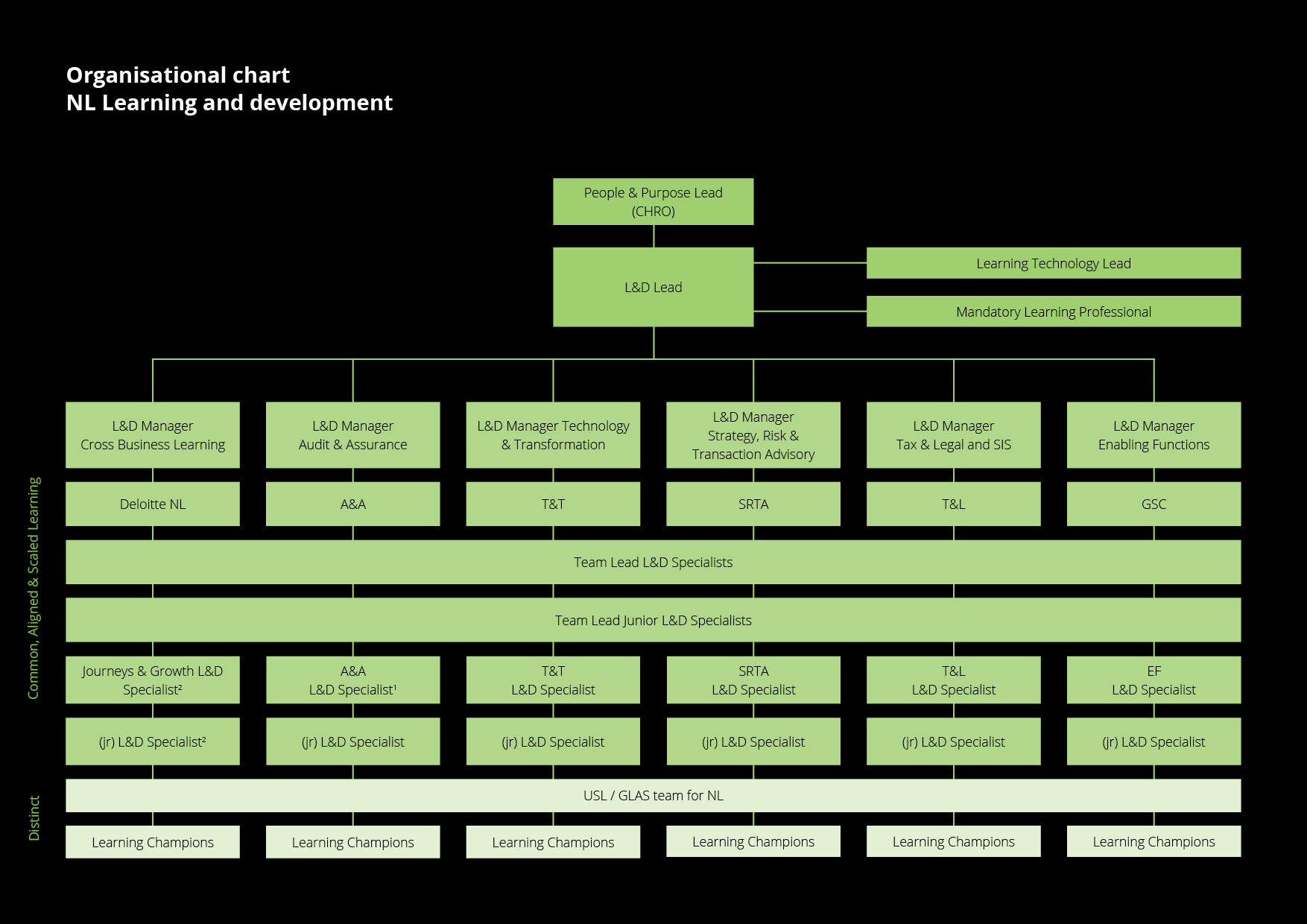
The team advances our global aspiration to be one of the world’s most responsible and respected organisations by creating a future‑ready workforce through personalised, tech‑enabled learning delivered in partnership across the network. By focusing on this ambition, L&D supports our employee value proposition: “Never Stop Growing.”
This ambition is expressed in six L&D priorities that were launched, expanded or delivered over the past year:
-
Scale capability programmes to build a future‑ready workforce with the skills and mindsets to lead and deliver through continuous, complex change and support our ongoing delivery transformation.
-
Invest in developing future leaders, strengthening their accountability, commercial capability and ability to lead through uncertainty.
-
Nurture an inclusive and ethical learning culture that embeds diversity, equity & inclusion, psychological safety, wellbeing and purpose in everything we do.
-
Create impactful learning experiences by combining a strong learning ecosystem with best‑in‑class design and skilled facilitators.
-
Optimise collaboration and effectiveness across NSE Leadership Development, Deloitte University EMEA, Global Delivery Networks and external vendors.
-
Improve our learning ecosystem and enforcement of learning integrity, particularly for mandated requirements.
We see learning and development as a continuous process that combines high‑impact (virtual) classroom experiences with on‑the‑job learning from projects and assignments, and exposure to communities of practice, conferences and other sources. By leveraging innovations such as AI‑driven simulations, adaptive learning and enhanced feedback, we are making time together—whether virtual or in person—more effective. In that time, employees engage in discussion, practise skills in a safe environment and build connections with peers. Outside the classroom, we provide a digital environment where new expertise is available on demand and can be accessed self‑paced, wherever and whenever needed.
One of our most visible investments is Deloitte University (DU) EMEA, a strategic lever for delivering Deloitte’s global strategy. DU EMEA serves as a lighthouse for talent, culture and Shared Values and is the physical manifestation of regional collaboration. Its ambition is to create a seamless talent experience as the undisputed centre for human leadership development and the premier learning and networking platform across EMEA. Deloitte University EMEA, located in Paris, opened in the summer of 2024 and has already welcomed its 25,000th learner. The Netherlands is strongly engaged with DU EMEA: both the University Dean and the Managing Partner for Operations are seconded from our firm. This year, 79 facilitators from the Netherlands delivered 164 live sessions for DU EMEA programmes. DU EMEA continues to refresh curricula, releasing new Enduring Human Capabilities and Sustainability courses and improving Commercial Excellence programmes to meet the needs of our people and businesses.
This year we also continued to strengthen our learning ecosystem to support a culture of learning integrity for mandated training. We worked with global teams to optimise the learning technology environment, integrating built‑in controls and improving user experience. We further invested in creating time and space to learn—for example, by allocating direct hours for facilitating learning—and in targeted interventions that reinforce our culture of integrity
Policies
Deloitte is a knowledge‑rich firm. The value we create is driven by talent. We build knowledge and experience by recruiting top graduates and experienced hires, supported by specialised Global Delivery Centres. To offer outstanding value to our clients, we continually develop our people’s expertise and skills and maintain standards through formal and informal learning curricula. We also share our insights publicly to improve understanding of the complex challenges we work on. Through continuous learning, our professionals develop their careers, strengthen their employability and increase their impact.
To stimulate learning and personal development, Deloitte has adopted, among others, the following policy:
High‑impact learning experiences
By combining leader‑led facilitation, on‑the‑job learning, digital platforms and targeted curricula, our learning model builds the capability, judgement and behaviours required to deliver sustained client impact and future readiness.
The policies below underpin the learner experience and ensure consistency, quality and sustainability in how learning is delivered.
|
Policy |
Description |
|
Leader-led facilitation Policy |
Facilitates the delivery of learning interventions by colleagues across the business to leverage internal expertise, reinforce our shared Deloitte perspective and foster knowledge sharing at scale. |
|
Study Facilities Scheme Policy |
Provides Deloitte employees with study- and time budgets required to participate in development programmes of renowned (academic) institutions. |
|
Audit & Assurance Mandatory Learning Facilitation Policy |
Allows facilitation time for Audit & Assurance mandatory learnings to be recorded as Direct Hours and captured using a dedicated time code to ensure consistent reporting. |
|
Location & Venue Policy |
Favor local offices or Deloitte University EMEA, yet other venues or third-party locations may also be used as long as these comply with our sustainability criteria. |
External expertise and academic partnerships
We recognise that our people often benefit from fresh perspectives. We therefore invite external experts and speakers to inspire and challenge our thinking and continue to partner with renowned academic institutions to educate current and future professionals and business leaders. Our external investment in learning and development totals €3.6 million. In addition, the organisation invests a further €11 million in leader‑led learning and development interventions. These investments help our workforce develop for their current roles and prepare for future careers at Deloitte or beyond.
Tracking and measuring effectiveness
Facilitation and learning activities are recorded through our finance systems and visualised in the NSE Learning Dashboard. This provides transparent insight into engagement, time use and cost allocation so business and L&D leaders can review participation and expenditure. The learning‑effectiveness survey is the central metric for assessing the value of our programmes. Beyond completion and satisfaction, it measures impact from the perspectives of participants and their people leads, including sustained behaviour change, and informs continuous improvement to ensure our learning investments deliver measurable value for our people and clients.
Deloitte University EMEA
Deloitte University EMEA is central to our strategy for growing leaders and raising capability across the firm. By bringing people together in a purpose‑built learning environment, DU EMEA complements local programmes, accelerates talent mobility and strengthens our shared Deloitte perspective.
DU EMEA also supports our leader‑led learning model by requiring Deloitte professionals to serve as facilitators. Employees complete a facilitation excellence programme and gain experience facilitating local sessions before delivering DU EMEA content. The Netherlands is proud to provide approximately 79 facilitators to Deloitte University EMEA to deliver the curriculum.
The policies set out below underpin the DU EMEA experience and ensure consistency, quality and sustainability in how programmes are delivered and attended.
|
Policy |
Description |
|
Deloitte University EMEA Travel Policy |
Contains provisions for international travel with an eye on reducing GHG emissions. It determines when to travel, how to travel (train) and in which travel class. |
|
Deloitte University EMEA Facilitation Policy |
Sets eligibility criteria and requirements for facilitators at Deloitte University, including required experience or qualifications to maintain quality standards. |
|
Deloitte University EMEA Cancellation Policy |
Defines cut‑off dates for free cancellation and procedures for arranging replacements and sets the financial and operational consequences of cancellations. |
Nominations, participation and completion for Deloitte University EMEA programmes are tracked through the Deloitte University EMEA dashboards and the Oscars reporting suite. Individual learning records are maintained in the Learning History Dashboard, which verifies employees’ adherence to Deloitte University EMEA policies. These tools are used in partnership with the business to manage nominations and ensure learning activity informs succession planning and talent development across the firm.
While we do not set hard attendance targets for Deloitte University EMEA, there are mandatory programmes that support employees’ career progression, together with guidelines on the timing and frequency of attendance. These guidelines help ensure a fair and strategic allocation of available places on DU EMEA programmes.
Mandatory learning
Serving with integrity is one of our shared values and is non‑negotiable. Learning and development are fundamental to meeting that standard. The curiosity of our people, together with a commitment to integrity, drives our work to design and elevate our professional learning environment. Mandatory learning is central to this effort: it helps us meet regulatory and professional requirements and underpins ethical practice, independence and public trust.
Key policies that govern mandatory learning and safeguard its integrity, delivery and compliance:
|
Policy |
Description |
|
Responsible and Ethical Learning Practices |
Sets out the ethical standards and behaviours expected of all practitioners when engaging in learning activities. |
|
Learning Attestation Policy |
Requires all employees to attest to our ethical standards when engaging in mandatory or compliance learning activities. |
|
Audit & Assurance Cancellation Policy |
Defines required actions and escalation route when an employee cannot attend or complete a mandatory module, and the steps to secure timely compliance. |
We track compliance via Mandatory Learning reports and the Audit & Assurance Learning Dashboard, ensuring transparent and auditable learning records. Our target remains 100% completion within prescribed deadlines; completion is a personal responsibility. Non‑completion is recorded, discussed in performance conversations, and may affect promotion decisions. In Audit & Assurance specifically, failure to comply within the agreed timeframe has an effect on the Impact Score, reflecting its significance.
Activities in 2025/2026
We delivered on initiatives and projects supporting our Employee Value Proposition, specifically the Never Stop Growing pillar:
-
Cascade strategic ambitions into defined L&D portfolios to clarify ownership, focus areas and delivery responsibilities; the Netherlands L&D strategy now serves as the cornerstone to ensure business plans and portfolios deliver measurable capability growth through personalised, tech‑enabled learning.
-
Expanded our Global Delivery Network support to scale delivery and leverage specialised expertise across geographies.
-
Scaled the integration of generative AI (GenAI)‑powered simulations and feedback across our curriculum by appointing a technology partner.
-
Developed current and future leaders by building leadership capabilities at all levels, leveraging Global, NSE and EMEA offerings.
-
Maximised the value of Deloitte University EMEA as a differentiator for attraction and retention, with a transparent and efficient nomination process.
-
Under the leadership of the newly appointed Mandatory Learning Professional, improved processes and reporting for all mandatory learning requirements.
-
Streamlined the process for practitioners seeking to use external study facilities within the organisation.
-
Partnered with an external organisation to design and deliver a high‑impact learning experience focused on improving feedback culture.
-
Executed our Impact and Measurement strategy, releasing two new/enhanced dashboards to support strategic and tactical decision‑making and to provide operational insights for business leaders when nominating employees for programmes.
-
Further professionalised the L&D team through upskilling and capability building, including team development days with external experts on instructional design, skills and capabilities, and GenAI for L&D.
-
Continued active participation in external knowledge groups, such as the Knowledge Group on Environmental Taxes of the Dutch Tax Authority and the Dutch Association of Tax Advisors (NOB).
Our products and services for 2025/2026 included, among others:
-
An enhanced learning‑needs analysis methodology, leveraging GenAI to improve effectiveness and efficiency, and strategic advice to the business on best‑in‑class learning solutions.
-
Curricula management to keep professional, leadership, industry and technical curricula current.
-
Design, development and deployment of high‑impact learning experiences, including faculty development.
-
A cross‑business learning curriculum delivering consistent capability development from pre‑manager to partner levels to support knowledge sharing and networking across units.
-
Annual L&D processes, including Deloitte University EMEA nominations and L&D budgeting, and delivery of strategic L&D plans per business for 2025/2026.
The combination of our learning strategy, portfolios, technology pilots, quality assurance and dedicated mandatory‑learning capacity ensures learning is relevant, auditable and aligned with our integrity commitments.
Results
Several internal and external developments during the year influenced the priorities and activities of the Learning & Development team.
Due to the enhanced supervision of the AFM and PCAOB, more focus has been put on defining and implementing additional reporting lines on mandatory learning requirements this year. Through targeted interventions, including the creation of a new learning experience, we have focused on enhancing our upward feedback culture. Additionally, reports on the (inappropriate) use of (Generative) AI applications by employees globally in their participation in learning experiences has provided guidance in our development of our (digital) learning environment to continuously mitigate new risks that arise.
Market developments and a stronger focus on client delivery led to more cancellations of learning programmes and a shift in demand towards development that strengthens commercial skills. In response, L&D redesigned parts of the curriculum, accelerated time‑to‑market for new offerings, and increased use of our Global Delivery Network to make learning more efficient and resilient.
Table 18: Average training hours based on headcount
|
2025/2026 |
2024/2025 |
|
|
Total |
72.0 |
73.9 |
|
By gender |
||
|
Male |
77.3 |
78.8 |
|
Female |
65.3 |
67.7 |
|
By category |
||
|
Partners |
27.9 |
30.0 |
|
Directors |
36.1 |
40.2 |
|
Senior managers |
46.6 |
50.7 |
|
Managers |
54.8 |
61.6 |
|
Aspirant / jr. managers |
97.2 |
97.0 |
|
Other staff |
17.9 |
25.8 |
|
Interns |
60.7 |
41.9 |
|
Average training hours per Business |
||
|
Audit & Assurance |
118.0 |
120.3 |
|
Enabling Functions |
14.6 |
14.3 |
|
Strategy Risk & Transaction Advisory |
50.0 |
57.8 |
|
Tax & Legal |
62.6 |
70.1 |
|
Technology & Transformation |
76.2 |
80.1 |
Learning hours for female employees on average are lower than for their male colleagues. This is due to a relative large proportion of female employees working within Enabling Functions where learning hours are significantly lower than in our client facing businesses.
As the amount of learning needed varies from year-to-year, we have not and will not set targets for the amount of hours spent on learning and development programmes. We monitor the effectiveness of our programmes through systematic feedback. Every business has dedicated L&D specialists who support the learning needs of their business. In addition, feedback is collected through surveys both at the end of a course and, more broadly, in the periodic Engage for Change survey cycle.
3.4 Wellbeing
Key results

Material impacts, risks and opportunities
In our Double Materiality Assessment as published on pages 93-98, we have identified the following material IRO for Wellbeing:
-
Impact on employees due to work-life balance affecting employee satisfaction, mental and physical health.
Our related activities contribute to the following SDGs:

Governance and policies
We aim to create a thriving workplace where employees develop and excel through integrated support: open dialogue with managers and peers, combined with Deloitte’s mental health, physical wellbeing and financial health resources. We balance comprehensive support with clear performance expectations, enabling everyone to reach their potential.
Our CHRO leads the Talent Organisation with distributed responsibility across Wellbeing Leaders, Case management Health, Deloitte Fit team and Occupational Health Service.
To achieve our objectives and manage the IROs connected with wellbeing, we have the following policies in place:
|
Policy |
Description |
|
Leave Policy |
Annual, sick, family-related, bereavement and care leave (extended to 3 weeks paid + 5 weeks unpaid as of January 1, 2025). Additional flexible options include sabbaticals, extended unpaid leave and time out arrangements to support career breaks, wellbeing and life transitions. |
|
Absenteeism Policy |
Early intervention, occupational health support and self-management model promoting sustainable employability |
|
Working Conditions Policy |
Standards for working hours, workload management and flexible working (hybrid/remote options) |
|
Access to Provisions & Services (Deloitte FIT / Recharge Platform) |
Integrated digital hub offering sport events, wellbeing workshops, Fit Forward Tour launched in FY25 (Health checks), mental health support (anonymous, multilingual), vitality sessions, coaching and resources across Mental Health, Physical Health and Financial Health pillars |
Activities in 2025/2026
Deloitte FIT / Recharge Platform: We launched an integrated digital hub centralising all wellbeing activities and resources. Employees access sport events, wellbeing workshops, health checks (Fit Forward Tour), vitality sessions with ambassadors and coaches, and resources across Mental Health, Physical Health and Financial Health pillars.
Mental Health: we have continued to offer accessible, anonymous mental health support with regular manager training and OpenUP coaching services.
Physical Health & Vitality: We launched the Fit Forward Tour, inviting employees to improve vitality through fitness events, health checks and coaching. Diversified offerings for all fitness levels and improved geographical accessibility. Introduced women’s health sessions (menopause) and lifestyle coaching (nutrition, sleep, exercise).
Illness & Recovery: we partnered with 'De Nieuwe Arts' for occupational health, strengthening our self-management approach with manager-employee collaboration. Piloted social work support and specialized burn-out recovery coaching to enhance employee recovery pathways.
Absence Management: We offer a range of coaching and mentoring options to support employees’ development, wellbeing and reintegration:
-
Career coach: ongoing, long‑term career development and coaching to explore strengths, set goals, develop actionable plans and discuss wellbeing‑related topics.
-
Internal coach: targeted support for issues that cannot be resolved by the line manager or career coach; helps employees understand recurring patterns and develop new approaches.
-
Mentoring (Mentoring@Deloitte): matched guidance from an experienced professional or leader to complement career coaching and line‑manager support, helping with career navigation, skill development and workplace challenges.
-
Financial coach (Financial Buddy): practical support for financial questions and concerns, including help navigating personal finances and the Dutch system.
In addition we have invested in tailored absence‑management software to give managers better insights while maintaining integrated data‑privacy practices.
Our attention to wellbeing is an ongoing effort to enhance the mental and physical wellbeing of our people. By active dialogue with our people, for example through our case managers, and the Engage for Change surveys, we constantly update our insights on this evolving topic. Going forward, we aim to take further meaningful steps as a result thereof.
Results
Table 19: Sickness leave
|
2025/2026 |
2024/2025 |
|
|
Sickness leave |
4.8% |
4.3% |
The results of our efforts in the area of wellbeing are influenced by geopolitical unrest, which impacts the international workforce composition and employee stress levels. In addition, we see an increase in leave in the Dutch labour market reflecting economic uncertainty and burnout prevalence. Finally, the results are impacted by healthcare system pressures (growing waiting lists) limiting access to external mental health support.
We have a Deloitte Health and Safety management system in place. Thankfully, in 2025/2026, there were no fatalities as a result of work-related injuries and work-related illness.
Employees of Deloitte are entitled to family-related leave. This means that family-related leave is not open to independent contractors, interns or to secondees and other temporary workers. The scheme also does not apply to expat outbounds sent on host package to a foreign member Firm and for expat inbounds sent on home package to Deloitte Netherlands. This means that 94.7% of our own workforce has access to our family-related leave options (2024/2025: 93.9%): 9.8% (8.0%) of male and 8.8% (7.1%) of female employees took family-related leave in 2025/2026.
We continue to work on developing metrics that better reflect our focus points for wellbeing and aim to publish the results thereof in our 2026/2027 report.
3.5 Social impact
Key results

We make social impact though:
-
our engagements as auditor or advisor to our clients;
-
the work of our Deloitte Impact Foundation, and;
-
the activities we engage in on social return.
In this paragraph, we focus on Deloitte Impact Foundation and on Social return
Material impacts, risks and opportunities
In our Double Materiality Assessment as published on pages 93-98, we have identified the following material IRO for Social impact:
-
Positive impact on our employees and society from engaging in societal partnerships to deliver diverse social projects in education, inclusion, entrepreneurship, and sustainability.
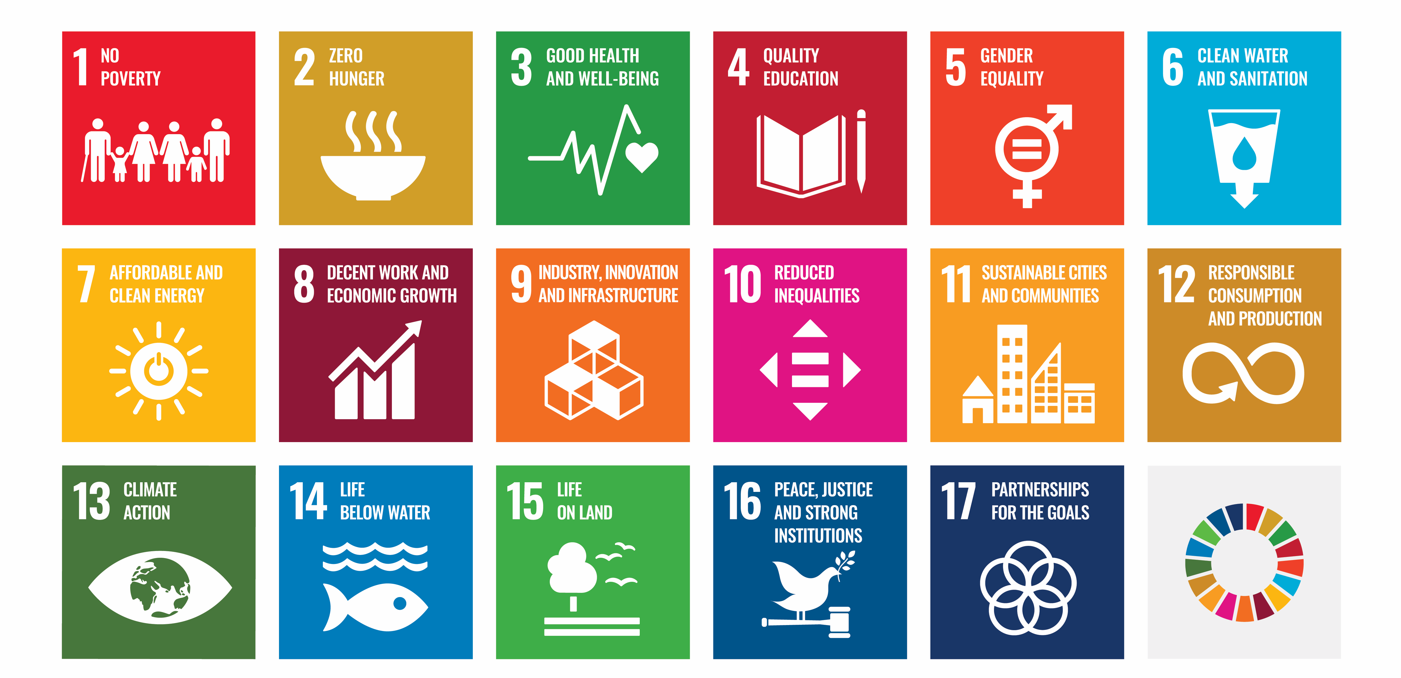
Due to the breadth of our social impact activities, our related activities contribute to the all of the SDGs:
Deloitte Impact Foundation
Governance
The Deloitte Impact Foundation (DIF) is part of the Executive Office (EO), which falls directly under the Executive Board of Deloitte the Netherlands (DNL). The Executive Office is led by the Chief of Staff to the Executive Board. As part of this team, the Deloitte Impact Foundation reports to the Executive Board. The ambition of the Deloitte Impact Foundation is a part of the Strategy of Deloitte the Netherlands.
The Deloitte Impact Foundation itself consists of various layers of responsibility and is organised in the following manner:
-
On the highest level, the Foundation is led by the Deloitte Impact Foundation Board, comprising of a chair (a member of the Executive Board) and two members (partners within Deloitte). Together, they are responsible for defining and maintaining the strategic direction of the Deloitte Impact Foundation. They also grant approvals for employee-led initiative submissions. Each Board member is responsible for one of the three themes the Foundation focuses on (i.e., WorldClass, Sustainability, and Inclusive Society).
-
The Advisory Board consists of colleagues from various levels and businesses across Deloitte. They advise the Deloitte Impact Foundation Board on the strategic direction of the foundation. Additionally, they provide advice on each initiative submission, after which the Deloitte Impact Foundation Board takes a final decision of approving or denying the submission.
The Deloitte Impact Foundation aims to allocate 1% of Deloitte Netherlands’ direct hours for pro bono work, translated in a target of 74,125 hours for this year. Every year, a new number of hours will be determined based on the 1% of Deloitte Netherlands’ direct hours. The Deloitte Impact Foundation likes to see an increase per year of employee involvement in its projects. This year, a target was set for 1,000 employees.
In terms of reputation risk, pro-bono work does not differ from client projects. This means that pro-bono initiatives are assessed via the same process as other client engagements:
-
All initiatives must have a sponsoring Deloitte partner involved, who is responsible for the execution and quality reviews;
-
All initiatives and partnerships are checked for independence issues by the RRL before continuing the approval process of the initiative;
-
An engagement letter is required. This has to be approved by the sponsoring partner of the function leading the initiative;
-
The initiative contributes positively to the Deloitte reputation. For example, it does not aim to convert people’s faiths, does not involve any sort of activism, religious or political, and cannot fund any criminal or any illegal activity.
Pillars
To amplify the impact of our Deloitte Impact Foundation, we concentrate our efforts in three key areas and collaborate with partners in ecosystems:
WorldClass | A global Deloitte initiative with the ambition of supporting 100 million people worldwide by 2030; In the Netherlands, the WorldClass programme focuses on improving the equality of opportunity of vulnerable young people in education, especially in primary, secondary, and middle-level vocational education in the larger cities of the Netherlands. Deloitte’s global WorldClass programme hit its target of empowering 100 million people five years ahead of schedule. In the Netherlands, our Impact Foundation contributed significantly, positively affecting nearly 500,000 lives through education and skills development. Although our global target has been achieved, we will continue with requests for education projects in the broadest sense under the name "Education".
Sustainability | Through our sustainability-related initiatives we protect our natural environment by addressing the root causes and effects of global warming and degradation of land, water, and air. This focus area aims to support future generations on our planet to live in a healthy and sustainable environment;
Inclusive society | This such as concerning poverty, safety, financial and mental health and loneliness of Dutch inhabitants.
There is a two-way approach in place to run initiatives within these three key areas: via employee-led initiatives and via top- down programmes. The employee-led initiatives aim to encourage every Deloitte NL employee to get involved in causes that are close to their hearts. Each employee can spend 1% on average of their working hours to start or join initiatives that create societal impact. The top-down programmes are the WorldClass programme as mentioned before and the Financial Health programme, which are large programmes that run for a longer period of time and to which more employees across Deloitte can devote their time.
The Financial Health programme, a top-down programme of the Deloitte Impact Foundation’s pillar ‘Inclusive Society,’ is working with SFGN (Stichting Financieel Gezond Nederland), Her Majesty Queen Máxima and about 45 other organisations, and has launched a national coalition (on November 29, 2022) on financial health (Nationale Coalitie Financiële Gezondheid or NCFG). This year, SchuldenLabNL and the NCFG have been brought together into a new organisation (SFGN). It realises and accelerates public‑private co‑operation to improve financial health in the Netherlands. The common goal is that by 2030, the number of people who experience financial stress is reduced by 50% (compared to 2015), and people are in control of their finances, now and in the future. Deloitte is the impact and knowledge partner of SFGN. Deloitte develops a model for measuring impact and reports on this. With its expertise, Deloitte contributes to scaling up proven methods and to developing game‑changers.
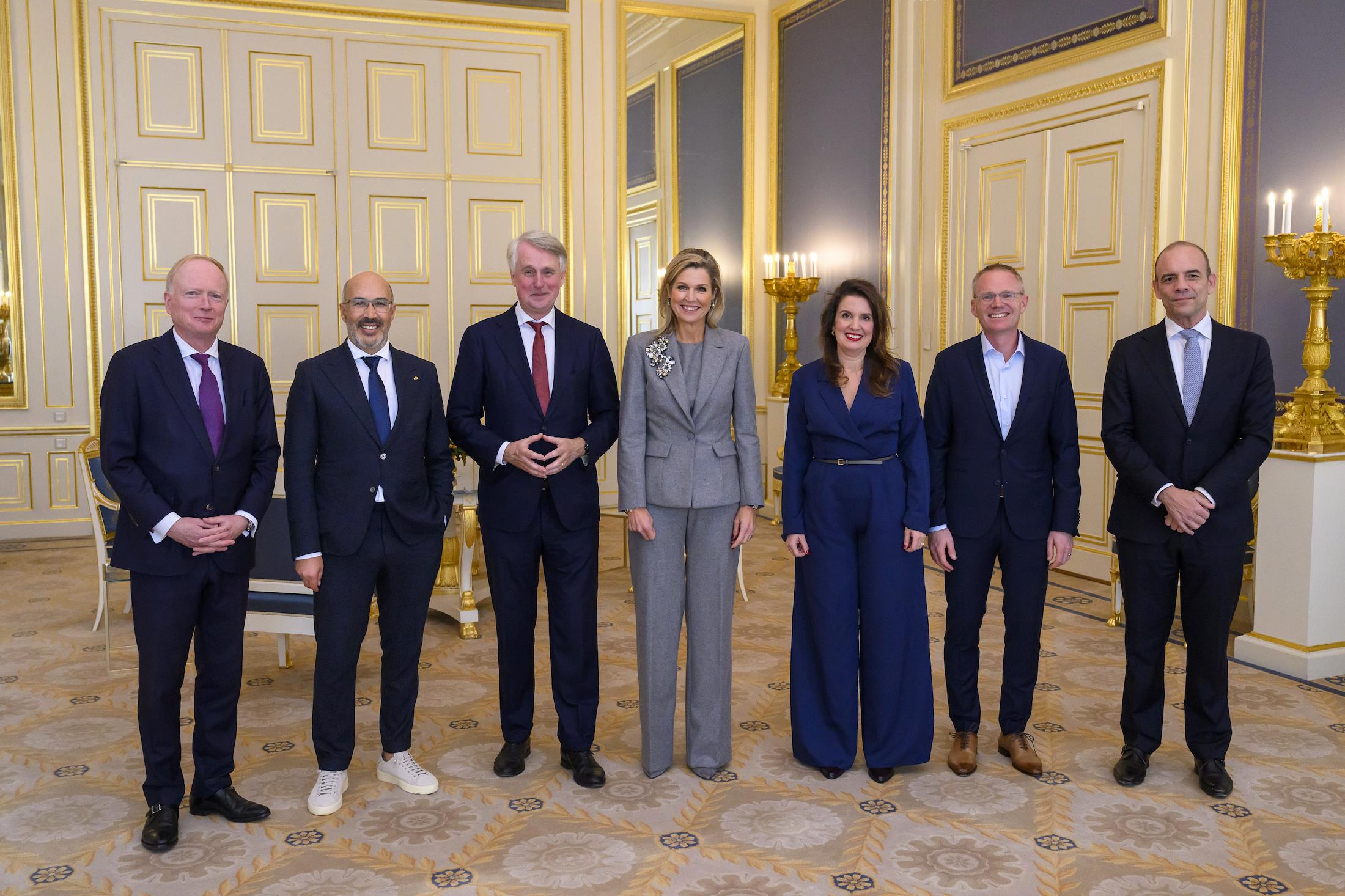
Deloitte CEO Hans Honig (far left) at the launch of SFGN with H.M. Queen Maxima in November 2025
Together with our partners (NIBUD "National Institute for Family Finance Information.", Leiden University and Tilburg University), we also provide annual insight into the financial health of Dutch households. We developed a methodology for measuring financial health to score Dutch households on a financial health scale.
We also measure the impact of various financial health initiatives to support their further scaling. Finally, for the third consecutive year, we are working on financially assisting vulnerable households with paying their energy bills through the “Tijdelijk Noodfonds Energie".
Process
Via the platform “Make an Impact,” the Deloitte Impact Foundation invites colleagues to either join an open vacancy, or to start their own initiative. To stimulate the involvement, we work together with a changemakers network that is represented in all of our businesses. The changemakers are the first point of contact for our colleagues.
To join an initiative, colleagues can search for vacancies in initiatives through the platform. Some vacancies require a motivation text that needs to be reviewed by the team or activity manager, who will get notified via the platform and will reach out to approve and share the DIF-hours code related to the project.
To start an initiative, colleagues are encouraged to find a cause they care about which fits the Deloitte Impact Foundation criteria (e.g., primary scope must be the Netherlands, alignment with the themes, impact should be clear) and to fill-out the Application Template with their project details in order to apply via the PMO team of the Deloitte Impact Foundation. All applications are assessed by the Advisory Board within 4-6 weeks. The applications are assessed during the monthly Advisory Board meetings in which the Advisory Board provides their preliminary advice, to be approved/disapproved by the Board.
Activities in 2025/2026
Below, we describe three initiatives that are illustrative for the activities of DIF in the year 2025/2026.
World Wide Fund Netherlands
This year, the Deloitte Impact Foundation entered a three‑year partnership with WWF‑NL. Uniting the knowledge and expertise of our people with WWF‑NL’s experience in protecting nature to help shape a future where nature can thrive. Through pro bono support, we will bring a mix of skills to different WWF‑NL projects. Examples are support to the implementation of TNFD that will enable businesses and finance to integrate nature into decision making. Another example is the upscaling of Nature-based Solutions for climate adaptation in Europe.
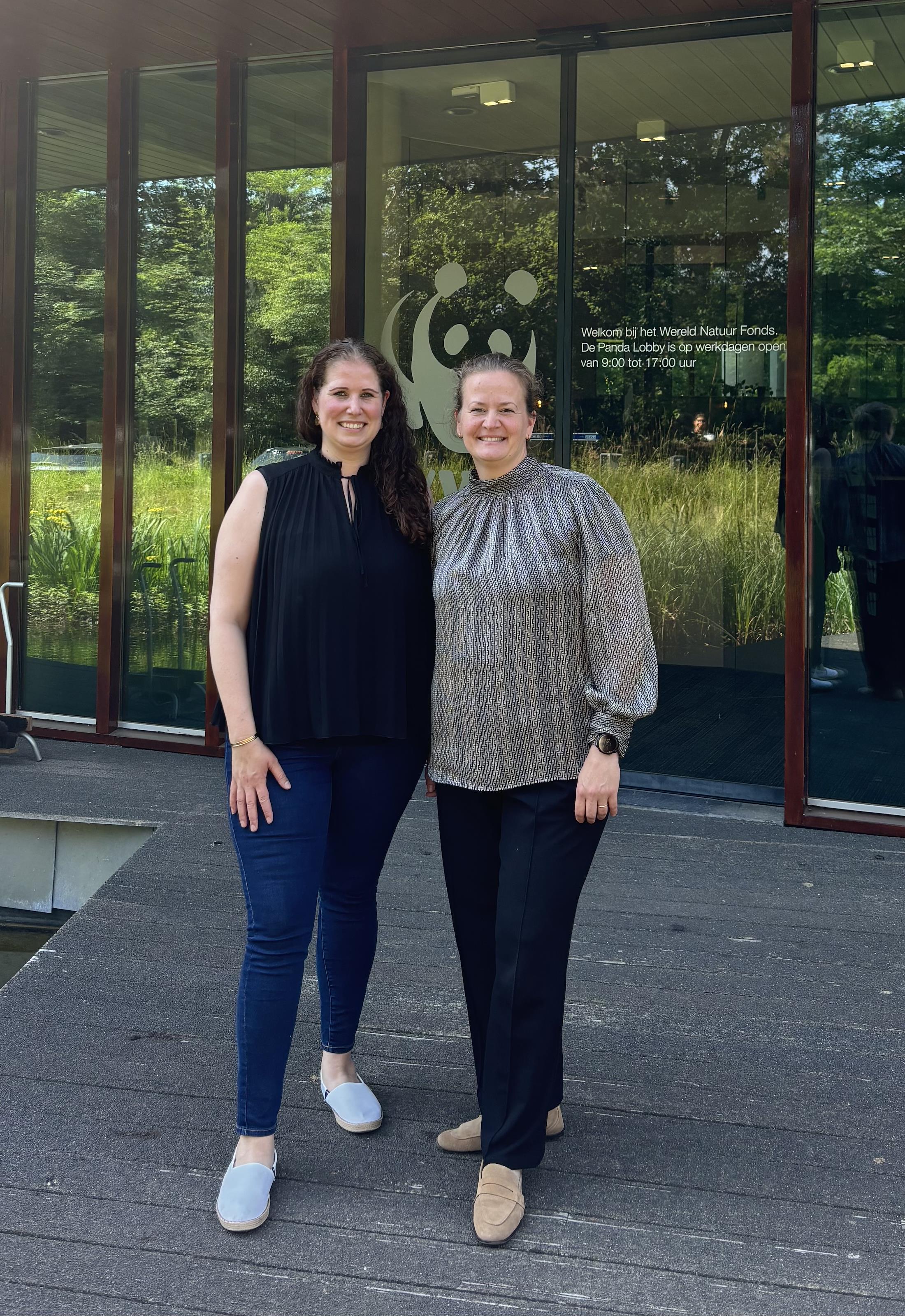
Christine Wortmann, WWF-NL Nature & Finance Lead (l) with Deloitte partner Anne-Claire van den Wall Bake (r)
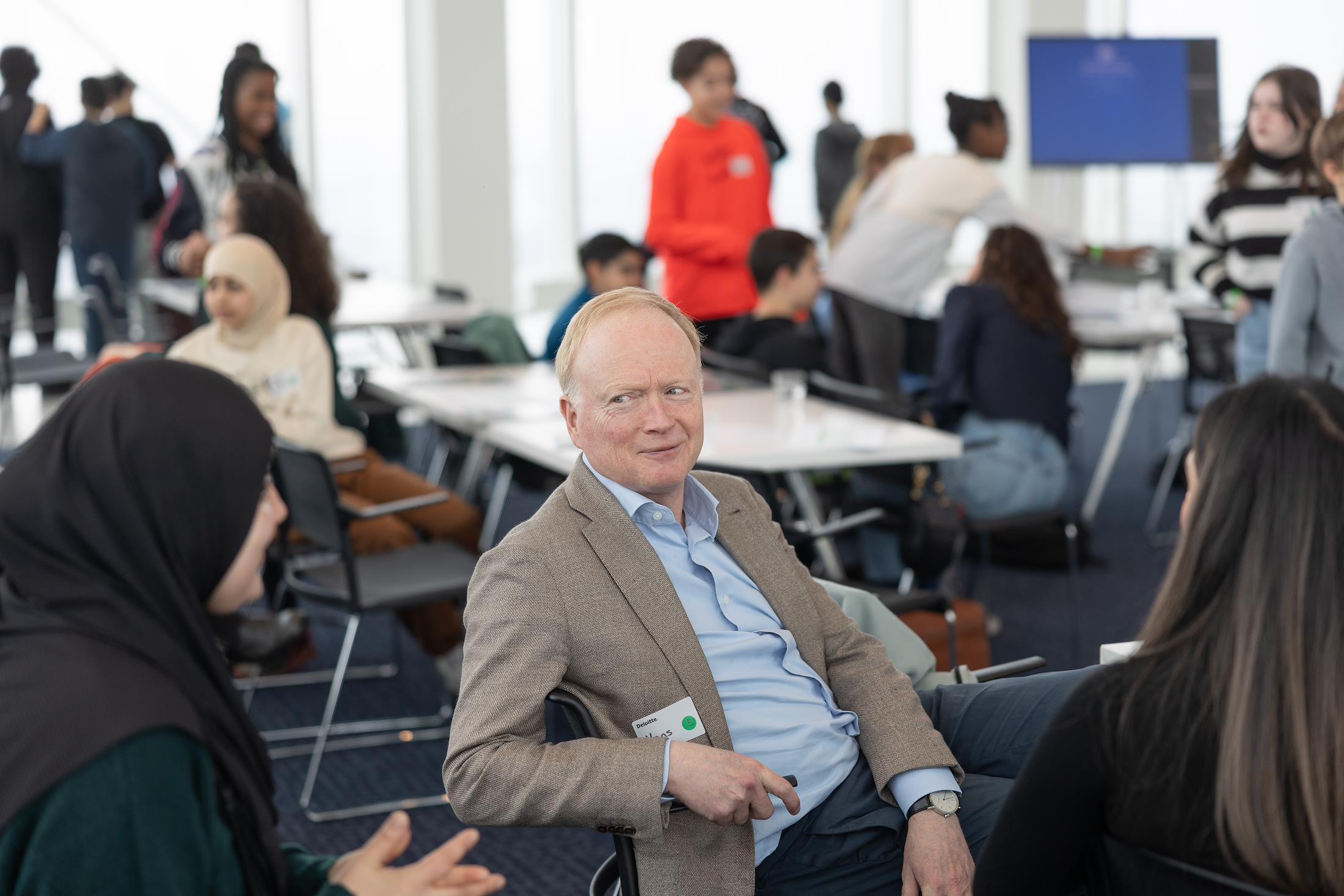
Deloitte CEO Hans Honig during the 'Week van het Geld' (Money Week)
WorldClass
Deloitte’s global WorldClass programme hit its target of empowering 100 million people five years ahead of schedule. In the Netherlands, our Impact Foundation contributed significantly, positively affecting nearly 500,000 lives through education and skills development. We will highlight a few milestones:
-
Studiezalen: 4,745 children reached with mentoring, workshops and financial education; in 2022 a coalition launch at the Johan Cruijff Arena brought together 550 children.
-
National Money Exam: c.58,000 pupils reached with free financial‑education resources; National Money Week events included a diploma handover by Mayor Halsema.
-
JINC collaboration: a 15+‑year partnership and almost 10,000 children supported through Career Coach, internships, digital skills and scaling work. Refugee projects: 450+ participants gained language, digital and employment skills via initiatives such as:
-
Future Academy and SpikeUP.AI.
-
Talenthub op Zuid: 330 MBO students received workshops on applications, presentation and self‑management; support continues for long‑term funding.
-
War Child
War Child’s mission to protect and support children affected by conflict is more vital than ever. Facing stretched capacity, War Child was looking for ways increase impact without compromising privacy or compliance.
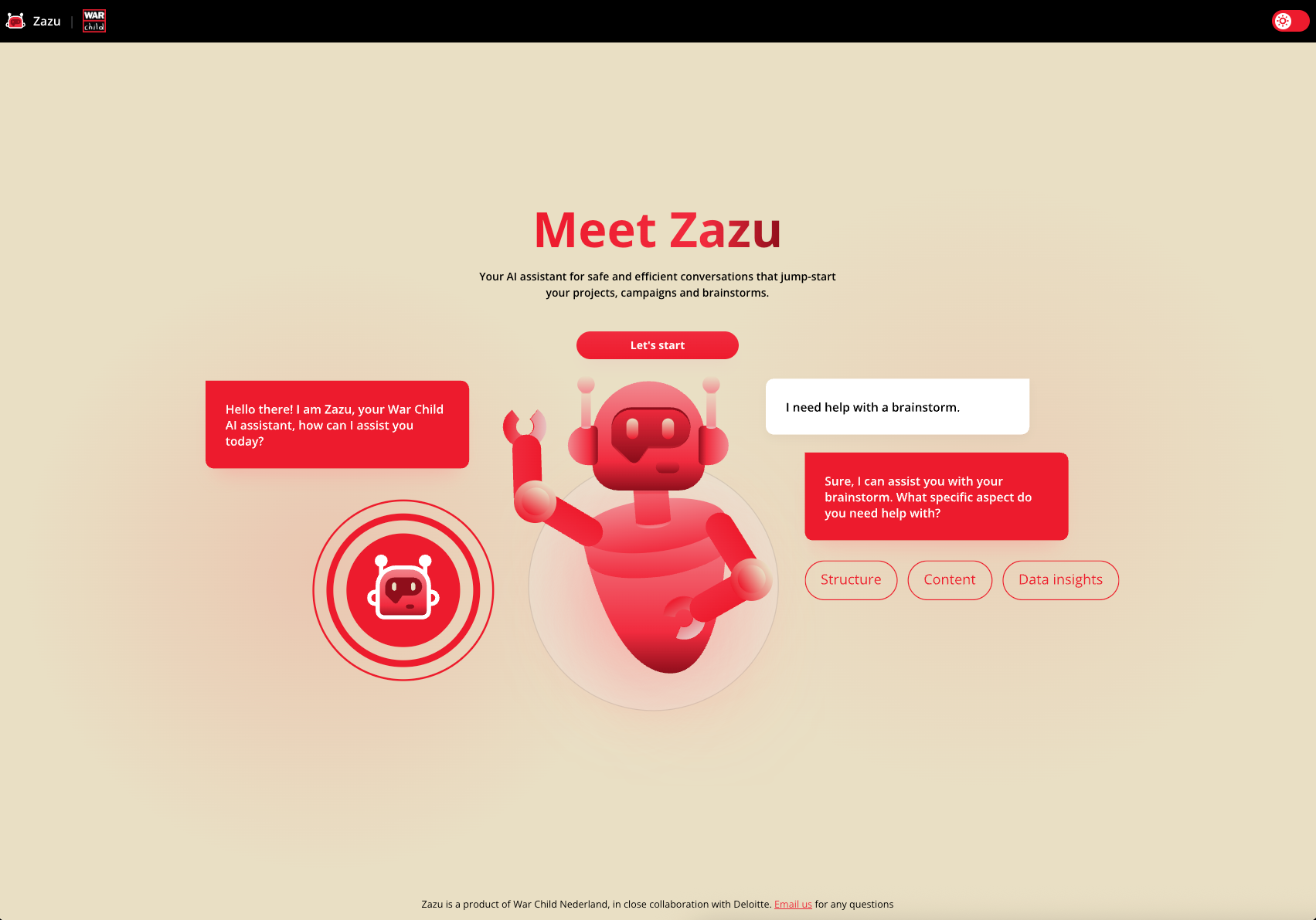
Deloitte’s AI & Data team led a use-case workshop with War Child’s fundraising and marketing teams to identify bottlenecks and design a safe AI approach. The team proposed a secure, private generative AI assistant that would allow staff to use sensitive data to produce more, personalised communications while always adhering to War Child’s tone of voice. With support from Deloitte’s Impact Foundation and colleagues from throughout Deloitte including AI & Data, Trustworthy AI, Change Management and Deloitte Innovation, Zazu was delivered. The solution is modelled on Deloitte’s internal secure AI tool Headstart and configured to War Child’s content and terminology.
Zazu runs in a closed, compliant environment with clear guidelines for responsible use. The user experience was kept intuitive and adoption was prioritised through hands-on training and practical documentation, which paid off with strong uptake soon after launch.
This project demonstrates what is possible when technology, innovation and implementation expertise unite behind a clear and urgent purpose.
Results
Table 20: Performance metrics Deloitte Impact Foundation 2025/2026
|
Performance |
Target |
|
|
# hours spent on DIF projects |
26,453 |
74,125 |
|
# of DIF projects |
69 |
- |
|
# employees involved in DIF projects |
1,051 |
1,000 |
The number of hours spent on DIF projects was considerably lower than our target for this year. The reason is twofold. First and foremost, there are fewer large projects and we see a tendency for our people towards initiating and participating in smaller projects. Secondly, with decreasing employment, our people have had to focus more on client projects reducing their availability for DIF.
Social return
Social return (or Social Return on Investment, SROI) is increasingly included in public procurements, even below the EU threshold. Local authorities prefer social return to help solve local social challenges, with a growing emphasis on hiring people from target groups - described in SROI as “people with a distance to the labour market”, and by Deloitte as “unseen talent”.
Assessment of social return is becoming more financially focused. As use grows, there is a risk that social return becomes an end in itself rather than a means to increase sustainable labour participation. At the same time, we see a shift in SROI, with more attention to suppliers’ intrinsic motivation to create impact. Contracting authorities are starting to align on frameworks and implementation approaches. All parties involved share positive intentions; the challenge is to align those intentions so we collectively strengthen labour participation and raise societal impact.
Deloitte aims to help coordinate change across the social return ecosystem to increase impact. Examples include co‑ordinating guidance published by the City Deal Impact Ondernemen (October 30, 2025) and engaging with national framework setters. We have a long‑standing commitment to social impact and run a dedicated social return programme with four pillars designed to show suppliers’ intrinsic motivation and to expand labour market opportunities for unseen talent. Social return is one mechanism within a broader approach to inclusion.
Policies
Social return is embedded in Deloitte’s operations through policies and tools that give control and visibility and allow us to respond to future developments.
|
Policy / tool |
Description |
|
Social Return Desk |
Two cross‑business staff (up from one) who support tenders, implement commitments and stimulate initiatives aligned with the four pillars |
|
Governance |
Social return sits in Enabling Functions (Clients & Markets). The Social Return Desk reports to function and industry leadership |
|
Dashboard |
Internal dashboard listing contracts and tenders with social return obligations; used for oversight and client accountability. Fully renewed in 2025 with historical data |
|
Tender process |
Social Return Desk joins weekly qualification calls. A process flow and tender checklist help the business identify and mitigate social return risks |
|
Four‑pillar approach |
The programme framework offering different implementation routes, aligned with Deloitte’s purpose |
We believe that together, these elements form a robust foundation for meeting current and future social return commitments, as confirmed by clients.
Activities in 2025/2026
Programme Scaling Social Enterprises | 20 participants (2025/2026: 16). Participants focus on labour participation for unseen talent; at least 30% of their workforce face employment barriers. Historically these enterprises have hired ~150 people and helped ~500 people into work. Deloitte provided pro bono support (3,000 hours). The third booklet was launched in May 2026;
Central government method 'Maatwerk voor Mensen' |cited in many tenders as an example of modern-day SROI. The responsible ministry recognises our collaboration as best practice. A planned multi‑supplier initiative was paused for political reasons; instead, a 2025 pilot retrains unemployed people as Energy Performance Advisors, aiming to train 20 people per year. Positive early results indicate potential scale‑up from mid‑2026.
City Deal Impact Ondernemen | formally ended March 2026 after five years. It achieved its goals to strengthen the impact economy. Ongoing initiatives (impact‑based financing, impactful procurement) will continue beyond the city deal. Deloitte’s role as national coordinator for 'impactful purchasing' was concluded in April 2026.
Inclusive Hiring & Social Buying | the Social Return Desk remains closely involved to ensure that meaningful results are realised. Social Buying learn‑and‑share sessions helped colleagues use social procurement and choose more impactful suppliers.
Other activities include:
-
Session at Deloitte Impact Foundation Hangout (Sept 2025) to help NGOs leverage social return for funding;
-
Participation in a programme connecting unseen talent (students) in Amsterdam-Zuidoost with employers on the Zuidas;
-
Contribution to a two‑part feature on volunteering and its relation to social return;
-
Continued cooperation with our caterer and an impact entrepreneur to create learning positions at The Edge restaurant to help people move towards regular employment.
Metrics and outlook
-
Minimum allocation required for social return in 2026: €2.2 million (2025: €2.2). This is lower than previously estimated due to volatile sales, expiring contracts, ramp‑up time for new contracts, and lower social return percentages on some long‑term software deals.
-
Inclusive hiring represents approximately 17% of total social return obligations (last year 12%). Social buying represents 10% (last year 15%). GDPR interpretation differences limit full recognition of some inclusive hiring results.
-
Estimated maximum allocation for 2027: €2.5 million (based on historical data and pending proposals).
Many 2025 activities supported our obligations even if they did not all produce direct, measurable social return value.
Client example: Social return fulfilment — Ministry of Infrastructure and Water Management and Deloitte; a long-term trusted partnership and collaboration to increase labour market participation for unseen talent.
The Ministry of Infrastructure and Water Management (I&W) is a frontrunner in meeting social return obligations in a meaningful way. The Category Management Hiring Professionals team, acting as lead buyer on behalf of central government, is responsible for social return requirements under several government‑wide framework agreements. In that role, and together with contracted suppliers, it develops initiatives that contribute to sustainable job creation for people who are further from the labour market.
To strengthen this approach, the Ministry launched the programme Maatwerk voor Mensen in 2018. Its core principle is to value social impact alongside the efforts a supplier makes to place people into sustainable employment, within the contractual framework agreed at tender. Maatwerk voor Mensen is widely used across public procurements as a reference and clarification of contracting authorities’ expectations of bidders. Over time I&W has developed the programme into Maatwerk voor Mensen (SROI 2.0), which is now applicable across the entire public sector, not only central government.
As a long‑standing supplier to central government, and in the context of our partnership with I&W, we welcome the autonomy this approach provides; it aligns with our business philosophy and our commitment to contribute to a more inclusive and equitable society. This forms an integral part of our integrated, four‑pillar social return programme, which we use to meet our social return obligations.
After contract award, both parties — based on mutual trust and positive prior results — enter constructive discussions about potential initiatives and agree a formal plan of approach. During implementation, the parties align periodically and make adjustments where necessary. If an intended initiative proves infeasible for compelling reasons, the parties determine jointly how to respond. For each agreement, I&W provides formal discharge at an appropriate point. Social return is also a standing item at the biannual suppliers’ meeting between I&W and its suppliers.
In 2018 we were early adopters of Maatwerk voor Mensen and ran a successful initiative under the Interim Management and Organisational Advice framework that helped 12 people into employment. The total social return obligation, based on realised and expected revenue across all relevant framework agreements, amounts to approximately €4,000,000. Around 50% of this obligation has been formally discharged and initiatives are underway to meet the remainder. A key success factor has been our collaboration with Binnenwerk, which has helped dozens of people into jobs in recent years. Binnenwerk is the central government organisation responsible for implementing the Banenafspraak. Together with I&W, we have full confidence that current and future obligations will be met in an impactful way.
Beyond formal fulfilment, both parties emphasise the importance of inspiring others and raising awareness of the value of labour‑market participation and projects that make a meaningful impact — ideally driven by intrinsic motivation. We are therefore proud that the social return knowledge event we co‑organised in October 2025 — attended by nearly 100 civil servants and government suppliers — was widely rated “excellent”. Collaborations of this kind strengthen our long‑term relationship with I&W and, importantly, help make social return a mechanism that stimulates labour‑market participation rather than an end in itself.
3.6 Global delivery centres
Key results

Material impacts, risks and opportunities
In our Double Materiality Assessment as published on pages 93-98, we have identified the following material IRO for Global delivery centres:
-
Positive impact of introducing appropriate Deloitte policies and practices, including learning and development, into our delivery centres, promoting employability, diversity and skills development.
Our related activities contribute to the following SDGs:

Governance
In our value chain (see page 94), we distinguish three categories of workers in the value chain:
-
People who work for our suppliers | Risk assessment and due diligence activities are performed by RRL and Procurement (see pages 92-93);
-
People who work for a Deloitte Global Delivery Centre (GDC) | These entities are part of Deloitte and are governed by the policies of DTTL;
-
People who work independently and are contracted by Deloitte | Contractors are independent companies - often sole proprietorship - that are used by Deloitte for qualified work such as service delivery to our clients. While working on behalf of Deloitte, their activities are subject to Deloitte's policies and standards.
As employees of our suppliers are covered by our due diligence approach and IROs for independent contractors in the Netherlands are not material, this section only covers our international colleagues who work for the Deloitte delivery centres that we use for delivering our services.
Policies
To safeguard the rights of employees in Global delivery centres, Deloitte maintains the following policies:
-
Deloitte NL Human rights policy statement;
-
Deloitte NSE Code of Conduct;
-
DTTL Human rights statement;
-
Deloitte member firm policies.
Together, these policies address the material IRO described above.
Activities in 2025/2026
Given that employees of Global Delivery Centres and contractors work 'shoulder to shoulder' with Deloitte Netherlands’ professionals, there is ongoing interaction between them. Our NSE Code of Conduct applies to all people working for or on behalf of Deloitte, hence also to our contractors and employees in Global Delivery Centres, including the obligation to raise ethical concerns and the non-retaliation policy. For suppliers and their employees, the NSE Responsible Procurement Policy provides ways to report suspected violations of the Responsible Procurement Policy by mail or using Deloitte Speak Up, if desired by the reporter, safeguarding anonymity.
As our DMA process has not indicated material negative impacts from our interaction with Global delivery centres, we have not designed fixed processes for engaging with GDC workers and their representatives about actual and potential impacts on them. Should our continuous risk assessments in the areas of integrity, environmental management and human rights show any material risks or impacts in any given instance, we will act accordingly.
Employees of GDCs are subject to all the trainings offered to them by the Deloitte Member Firm under which responsibility they operate. This means – for instance – that they will have to comply with all the mandatory training programmes that DTTL rolls out in the area of financial crime and ethics. Contractors are subject to a specific mandatory training programme prior to them being able to perform work for Deloitte.
The absence of material negative impacts identified through our DMA process, also means that we do not have processes in place to provide for or cooperate in the remediation of negative impacts on value chain workers that Deloitte is connected with. As described above, we do have reporting channels available to value chain workers to report any misconduct.
Results
Due to the modifications made in our IROs during the last iteration of our DMA, we have not yet designed and implemented metrics to measure the effectiveness of our policies and activities. During the next reporting year, we will assess which metrics and targets are most suitable to this end.
3.7 Responsible AI
Deloitte is integrating artificial intelligence across our operations to deliver better results for clients. However, this is not about replacing people with machines. Instead, the aim is to combine the expertise of our teams with modern AI tools so that we can work faster, more consistently and to a higher standard. We are invested in the development of our professionals. AI fluency is a skill that everyone needs to master. To this end, we provide all our employees the opportunity to further develop their AI skills and support them with state-of-the-art tools, training and on the job learning opportunities. The systems we have built include built-in safety features that protect against common mistakes, whilst our governance structures and training programmes help us manage risks and ensure our people can use these tools confidently and responsibly.
Material impacts, risks and opportunities
In our Double Materiality Assessment as published on pages 93-98, we have identified the following material IROs for Responsible AI:
-
Negative impact on society of increasing use of AI, advised by us to our clients, on employment throughout the value chain, leading to loss of income and causing economic disruption;
-
The risk of irresponsible use of AI, leading to degradation of public trust and financial and reputation damage to the Deloitte brand.
Our related activities contribute to the following SDGs:

Policies and activities 2025/2026
Clear rules and expectations guide how artificial intelligence should be used across the firm, establishing clear responsibility for compliance. Rather than relying on abstract policies alone, we provide practical guidance and straightforward checklists that help our people understand what is expected of them. Different teams’ own responsibility for specific policies, and their decisions are reviewed by colleagues in quality and risk management to ensure everything aligns with the firm's overall approach to quality. When necessary, we report on these matters to audit committees and other oversight bodies so that senior leadership and external stakeholders understand how we are managing this important area.
Safety features built into our tools
The platforms our people use every day include safety features (‘guardrails’) that help prevent common errors. These features work in several ways. When the system suggests a reference or source, it requires users to confirm where that information comes from. The system also shows users clearly whether information has come directly from a named source or whether it has been inferred by the artificial intelligence model. We continuously update these guardrails in response to new developments in the market and issues we observe in practice. In addition, we are exploring ways to use machine assistance to automatically identify and fix problems with references and the attribution of sources. All our AI activities are required to comply with our policies and procedures for data security and privacy as outlined in section 4.3 of the Sustainability statement.
The human-in-the-loop
Human judgment remains at the heart of everything we do. We combine mandatory training on how to use artificial intelligence effectively with clear guidance on when and how people should step in and take control. Our training programme includes online modules, practical materials and support from colleagues, all designed to help staff become confident users of AI. This means understanding what these tools do well, recognising where they have limitations, and knowing when to apply professional judgment because the model is uncertain. By combining these safety measures with investment in people's skills, we aim to reduce the risk that our professionals will rely too heavily on automation. Ultimately, our professionals remain responsible for the work they deliver to clients.
Growing use and learning from experience
More and more people across the firm are using our internal artificial intelligence tools, and we track this growth carefully to understand how widely these tools are being adopted and how often they are being used. Different platforms measure adoption in different ways, but the overall picture is encouraging. Some tools are seeing strong initial uptake, and a meaningful group of regular users has emerged who use artificial intelligence as part of their daily work. These experienced users are valuable in two ways: they help us unlock deeper value from technology, and they act as advocates who show colleagues practical ways to apply these tools to real challenges. We use data on adoption and usage to shape our training programmes, guide improvements to our tools and set realistic targets. In the coming year, we will assess how targets and metrics in the area of AI can provide our stakeholders with greater insights into our strategy and performance.
Protecting our reputation and quality
We take the risks to our reputation and the quality of our work very seriously. We understand that if one part of the firm makes a mistake, it can affect how clients and the wider public will view the entire organisation, regardless of good practice elsewhere. As automated systems increasingly scan our public reports and external publications, it is essential that we get our references right and maintain consistent standards. This matters both for the quality of work we deliver to clients and for how we are perceived by external stakeholders. To address this, we are prioritising transparent sourcing of information, peer review of important work, and automated checks to prevent avoidable errors. In addition, we have horizon scanning in place that allows our practitioners to swiftly respond to societal incidents, concerns and developments and act upon these if needed.
What comes next
Looking forward, we will continue to refine our safety measures and introduce new automated protections where they genuinely add value. At the same time, we will keep investing in our people's ability to use these tools responsibly and effectively. Our immediate priorities include developing better ways to measure meaningful adoption of artificial intelligence, expanding the use of machine assistance to check references, and working with policy teams and quality specialists to make sure our guidance is sound and fit for purpose. Our goal is straightforward: use artificial intelligence to deliver better outcomes for our clients whilst keeping human judgment and professional responsibility at the centre of everything we do.
Metrics and targets
As stated above, we are developing meaningful metrics on Responsible AI and will assess there suitability for public reporting in the coming year.