


1. General information
Introduction
This report has been prepared in accordance with the European Sustainability Reporting Standards (ESRS) set out in Annex 1 to Commission Delegated Regulation (EU) 2023/2772 of July 31, 2023, which supplements Directive 2013/34/EU of the European Parliament and of the Council. An ESRS content index is included in this report (see pages 156 onwards). The index provides an overview of where we comply with the ESRS and where we do not. As a member of the UN Global Compact Netherlands, we map our impacts to the UN Sustainable Development Goals we consider most relevant to Deloitte.
Deloitte aims to be at the forefront of public reporting and has a long-standing practice of voluntarily disclosing audited financial and non-financial information. Reporting is an evolving process: each year we seek to improve on prior years and to apply the latest reporting guidance and requirements.
In line with ESRS E1: General requirements, Appendix C (List of phased‑in disclosure requirements), we have used the following phase‑in options:
-
ESRS 2 SBM-3 (Material impacts, risks and opportunities and their interaction with strategy and business model): only disclosed qualitatively;
-
ESRS E1-9 (Anticipated financial effects from material physical and transition risks and potential climate-related opportunities): only disclosed qualitatively.
Disclosures incorporated by reference
The following information is incorporated by reference to other parts of the management report:
-
The role of the administrative, management and supervisory bodies (ESRS 2 GOV-1): Roles and responsibilities, Report of the Supervisory Board, Profile Supervisory Board Deloitte Netherlands;
-
Information provided to and sustainability matters addressed by the undertaking’s administrative, management and supervisory bodies (ESRS 2 GOV-2): Report of the Supervisory Board;
-
Strategy, business model and value chain (ESRS 2 SBM-1): Our businesses and industries, About Deloitte, Our purpose and strategy, Our progress, Value creation;
-
Interests and views of stakeholders (ESRS 2 SBM-2): Our progress;
-
Material impacts, risks and opportunities (IROs) and their interaction with strategy and business model (ESRS 2 SBM-3): Value creation model, Our Purpose and Strategy;
-
Description of the process to identify and assess material impacts, risks and opportunities (ESRS 2 IRO-1): Risk Management;
-
Disclosure Requirements in ESRS covered by the undertaking’s sustainability statement (ESRS 2 IRO-2): ESRS Content Index (Annex 3).
We have not includes a table of all the datapoints that derive from other EU legislation as listed in Appendix B of ESRS 2 as this requirement is not material to Deloitte.
The Executive Board, under the supervision of the Supervisory Board, is actively involved in executing our strategy and running the business. Impacts, risks and opportunities related to strategic topics — such as our Employee value proposition, Diversity, equity and inclusion, Learning and development, Quality, and Climate and CO2 — are regularly discussed between topic owners and the Board, in many cases backed up by quarterly performance dashboards. For other material topics we report periodically, both quantitatively and qualitatively (for example DIF and social return). All reported cases relating to ethics and integrity are discussed with the Executive Board and escalated to the Supervisory Board as appropriate. Data security (including privacy) is escalated to the Board when required, for example in the event of major incidents. The Executive Board can be awarded a flexible pay of maximum 20% depending on the realisation of our strategy (also see page 71). Regulatory quality and gender balance are two of the twelve strategic targets that determine the amount of flexible pay awarded. Decisions on flexible remuneration are taken by the Supervisory Board.
Deloitte has published a profile for the Supervisory Board of Deloitte Netherlands. This profile contains provisions on composition, desired knowledge and skills for SB members as well as specific requirements for the Chair of the SB and its Committees. Relevant knowledge in sustainability is part of the desired knowledge and skills of the SB members. Due to their past working experience and current and past external positions mainly in the financial services industry, all of our SB members meet the requirement with in-depth knowledge across the areas of environment, social and governance.
EU Taxonomy
To prepare for future EU Taxonomy reporting, we have identified activities that may be eligible and potentially aligned with the Taxonomy’s first two environmental objectives. To ensure a consistent approach across Deloitte firms in the European Union, Deloitte Netherlands will work with other EU geographies to align methodologies for this reporting. Our ambition is for Deloitte EMEA and the Deloitte firms in scope to report in conformity with the EU Taxonomy for the financial year 2027/2028. In general, most of our revenue comes from professional services that are not classified as 'eligible turnover' under the EU Taxonomy.
1.1 Sustainability due diligence
With a procurement footprint of around €250 million, we create both positive economic impacts and potential ethical, environmental and human‑rights risks across our supply chain. With close to 10,000 clients, we aim to ensure we work with organisations that comply with our policies and Deloitte values. As on organisation we thereby recognise the importance of the integration of sustainability considerations across our due diligence processes. This section summarises our approach to sustainability due diligence.
Context and commitment
Deloitte Netherlands buys goods and services across key categories — temporary labour & talent, professional services, real estate & office services, travel and technology — with most of the supply base rooted in the Netherlands. Procurement has a dual impact: it supports economic activity and supplier development, yet may create ethical, environmental and human‑rights risks which we are committed to mitigating. Our human rights commitment is expressed through the Global Human Rights Policy Statement, the Dutch Human Rights Policy Statement, our Responsible Procurement Policy and related policies referenced publicly.
Governance and responsibilities
Oversight of procurement and supplier engagement are provided by the Procurement team within the global CoRe Procurement organisation, with regular supplier compliance checks overseen by the Reputation and Risk Leadership office for all suppliers. Training for procurement professionals is delivered in alignment with our WorldClimate ambitions and the Responsible Procurement Policy (RPP) has been integrated into our procurement process and the General Purchasing Conditions (GPC). Overall responsibility of sustainability lies with the Chief Quality & Risk Officer, who is a member of our Executive Board.
Due dilligence and processes
We use the Business Relationship Assessment Tool (BRAT) to assess new vendors for independence, integrity, compliance and human rights exposure, and maintain a roster of preferred suppliers vetted through BRAT. General Purchasing Conditions require adherence to the Deloitte RPP, which covers human rights, labour standards, environmental practices and anti‑corruption. We increasingly integrate ESG considerations in supplier selection criteria and contractual negotiations, with ESG clauses being integrated into contracts where relevant. For human rights, we have based our approach on the Universal Declaration of Human Rights, the UN Guiding Principles on Business and Human Rights and OECD Guidelines.
Prior to accepting clients, they go through our client acceptance process. In this process, a broad variety of acceptance checks are performed, including whether the client or their associated companies have been involved in any major incidents. In addition, prior to accepting an engagement for existing clients, the engagement team has to map and mitigate all the risks associated with that specific engagement. Both procedures are designed to prevent Deloitte working for clients or accepting engagements that potentially can jeopardise our shared values and principles, compliance with laws and regulations, reputation or purpose. In addition to these procedures, Responsible Business Committee (RBC) in Deloitte NL provides an extra layer of cross-business dialogue in cases where client and/or engagement acceptance matters potentially have a significant public interest or purpose factor. Anyone within Deloitte can escalate a specific scenario to the RBC and the RBC seeks to provide guidance and support to NL teams in applying and executing our Shared Values and Global Principles.
Findings and risk profile
In our Human Rights Impact assessment, we have identified salient human‑rights issues linked to our role as employer, procurer and advisor. These include diversity, non‑discrimination and freedom of expression, mental (occupational) safety, education and skills development, climate transition, modern slavery, and indigenous peoples/minorities. We are not aware of reported cases in 2025/2026 in which Deloitte would be implicated for non‑respect of the UNGPs, ILO Declaration or OECD Guidelines in our upstream or downstream value chain.
Actions, KPIs and outcomes
In line with our Netzero programme we set a target for 67% of our suppliers (by emissions) to have Science Based Targets (SBTs) aligned with the 1.5°C goal. We have not yet met this target and continue to work collaboratively with suppliers to increase coverage and to ensure alignment with the principles set out in our Responsible Procurement Policy. We are actively engaging strategic suppliers to develop SBTs and disclose to under the Carbon Disclosure Project (CDP). Specific actions in this respect included the NSE Sustainable Procurement Roundtable, the Responsible Procurement Policy rollout, mandatory General Purchasing Conditions which include sustainability commitments and training for procurement staff. As our Responsible Procurement Policy is mandated in the General Purchasing Conditions, the majority of our procurement is covered by the Policy.
Remediation and stakeholder engagement
Grievances and misconduct can be reported through Deloitte SpeakUp, a confidential hotline, and where applicable via the Deloitte complaints procedure. We operate supplier engagement programmes, stakeholder dialogues and participate in peer learning, for example through the UN Global Compact Peer Learning Group, to strengthen our due diligence processes.
Next steps and targets for 2026/2027
-
Continue to engage strategic suppliers to reach the 67% SBT target and report progress publicly;
-
Further enhance Human Rights considerations across our client and engagement acceptance process by integrating Human Right criteria in our existing process and providing ongoing training on updated Human Rights risks;
-
Increase contractual sustainability requirements across legacy contracts and more stringent requirements to apply the GPC;
-
Improve visibility of human‑rights data across the value chain and strengthen grievance case management and reporting;
-
Increase awareness of the importance of sustainability due diligence with our employees;
-
Expand and maintain our evidence tracker with enhanced supplier registry capturing that includes spend, risk rating, SBT status, contract clause status and grievance flag. This will also allow us to map the % of spend covered by SBTs, RPP and GPC;
-
Define more robust supplier ESG scoring methodology and scorecard template.
1.2 Scope
In this Report, ‘Deloitte’ refers to Coöperatief Deloitte U.A. and its subsidiaries as listed in the ‘Notes to the specific items on the financial statements’ in Annex 1. The performance of Deloitte Dutch Caribbean (DDC) is integrated in our non-financial data, unless otherwise indicated.
For the purpose of this report, we apply the following definitions regarding the scoping of time:
Short-term: less than one year;
Middle-term: one to five years;
Long-term: more than five years.
1.3 Reporting boundaries
There is an overlap of topics and related opportunities noted by our internal and external stakeholders. Most of these topics relate to our internal organisation. For this reason, our reporting on these topics is limited to our performance within our direct sphere of influence, unless indicated otherwise. This is the case for our Scope 3 emissions upstream, where we discuss our due diligence processes upstream and downstream and for the topic 'Global delivery network'.
1.4 Reliability and completeness
We have collected the relevant performance data from our business information systems as supported by our internal control and monitoring systems, and from suppliers and other sources. This is centrally recorded and thereafter reviewed by our Finance & Control department and the KPI owners.
1.5 Materiality
Process to assess materiality
In our 2024/2025 Integrated Annual Report, we merged the conclusions of our DMA from the previous year, with the results from the DMA, including the defined Impacts, Risks and Opportunities (IROs), that was performed by NSE. Our 2024/2025 DMA was performed on the basis of stakeholder inclusion taking a seven step approach:
-
Preparation and value chain analysis | In this phase, experts for the process were identified, activities were mapped, the value chain was visualised, and stakeholder groups were identified. Additionally, the stakeholder engagement strategy and materials were defined and validated.
-
Identification of ESG topics & IROs | An ESG topic longlist was constructed based on Appendix A of ESRS-1, peer benchmarking, and external frameworks. This longlist was then filtered to a shortlist using a defined methodology, which was validated with a Consultative Group. Impacts, risks, and opportunities (IROs) were identified through input from subject-matter experts, interviews, and questionnaires.
-
Identification of thresholds | This involved defining time horizons, scales, and thresholds, aligning them with financial realities, and validating them with the Enterprise Risk Framework.
-
IROs assessment | Stakeholders were engaged using tailored tools, training was provided to interviewees, and stakeholder input was analysed. A scoring methodology was defined, stakeholder feedback was leveraged, and results were analysed to challenge and validate IRO assessments.
-
Topic mapping | Aligning Deloitte-specific terminology with ESRS requirements through detailed topic mapping.
-
Double materiality validation and visualisation | Visualisation options were benchmarked, results for double materiality assessments were substantiated, and findings were pre-validated and validated with senior leadership.
-
Documentation | A detailed chronological record of the entire process was created, capturing activities, stakeholder engagement, rationale, outcomes, and supporting evidence.
This year, in anticipation of the new ESRS, we have reviewed our DMA through a more strategic lens. The aim of this review was to challenge and validate the outcomes of our previous DMA for the current reporting cycle, reviewing both the materiality of topics and the associated IROs.
In line with the new (draft) ESRS for top-down Double Materiality, we have used the following inputs:
-
Peer benchmark based on 2024/2025 reporting;
-
Deloitte business model;
-
Deloitte strategy 2027;
-
Our Enterprise Risk Framework;
-
The characteristics of the main actors in our value chain on the basis of inputs from the 'owners' within Deloitte.
We have connected the topics mentioned in the (new) ESRS as well as possible entity specific topics to the inputs mentioned above.
The synthesis and proposed materiality of topics and IROs were discussed and approved by our Executive Board. Consequently, the result of the EB discussion was shared with the Audit and Finance Committee of the Supervisory Board for their inputs and validation in their oversight role.
Alignment within Deloitte NSE/EMEA
Parallel to the DNL process, NSE has run a process of its own to facilitate reporting in their geographies. Alignment between this process and the Deloitte Netherlands process has taken place frequently. As a results, the IROs as published in our 2024/2025 IAR have been made more concise.
Stakeholder interaction
We interact with our stakeholders to seek their opinions and their expectations. This process allows us to define a timely and adequate response to the issues they deem important for our business and for our ability to make an impact that matters.
Graph: Stakeholders in our value chain
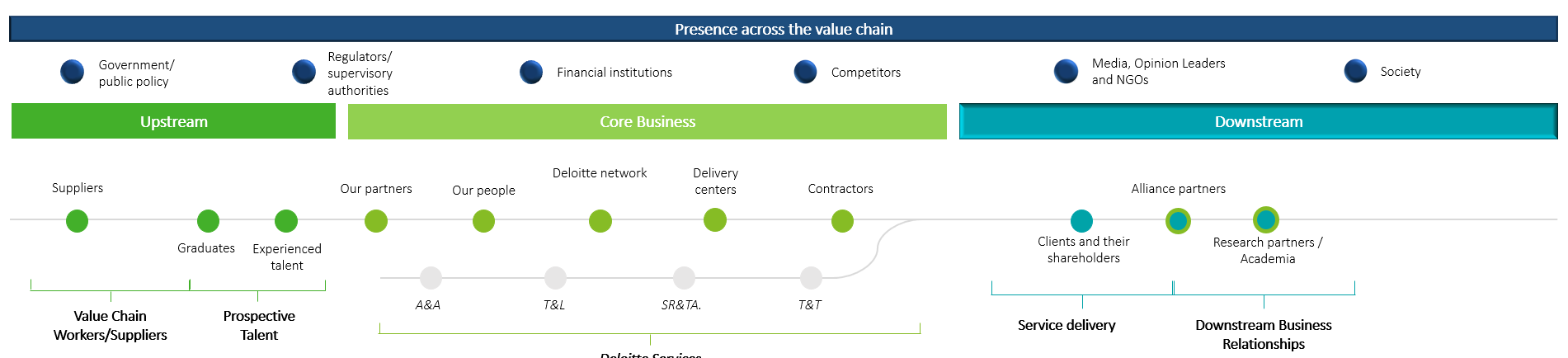
Table 01: Means of stakeholder interaction
|
Stakeholder groups |
How we seek their views |
Frequency |
|---|---|---|
|
Clients & their shareholders* |
Client Service Assessments |
Continuous |
|
Engagement quality assessments |
Continuous |
|
|
Client meetings and (digital) events |
Continuous |
|
|
Requests for proposals |
Continuous |
|
|
Clients & Industries research |
Continuous |
|
|
External research and ratings |
Continuous |
|
|
Media scanning |
Continuous |
|
|
Our people* |
Talent surveys |
> 6 times/year |
|
Sustainability survey and focus groups |
Bi-annually |
|
|
Discussions with Works Council |
Continuous |
|
|
Formal and informal meetings, including virtual townhalls |
Continuous |
|
|
Feedback / comments from individuals |
Continuous |
|
|
Our partners* |
Formal and informal partner meetings |
Continuous |
|
Partner strategy sessions |
Annually |
|
|
Partnership Council |
When needed |
|
|
Receiving feedback |
Continuous |
|
|
Graduates and experienced talent* |
Surveys and research |
Continuous |
|
Job interviews |
Continuous |
|
|
LinkedIn profiles |
Continuous |
|
|
Participation in campus events |
Continuous |
|
|
Recruitment sessions |
Continuous |
|
|
Deloitte network* |
Active participation in key DTTL and NSE governance bodies |
Continuous |
|
International cooperation around issues or engagements |
Continuous |
|
|
Regulators |
Formal and informal meetings |
> 4 times/year |
|
Media scanning |
Continuous |
|
|
Media, Opinion leaders & NGOs |
One-on-one engagements |
Throughout year |
|
Cooperation with knowledge institutes such as universities |
Continuous |
|
|
Media scanning |
Continuous |
|
|
Society* |
Active participation of Deloitters in society |
Continuous |
|
Media scanning |
Continuous |
|
|
Competitors |
Active participation in trade and industry platforms |
Continuous |
|
One-on-one sessions around themes or issues |
Throughout year |
|
|
Media scanning |
Continuous |
|
|
Suppliers* |
Contract management |
> once/year |
|
Media scanning |
Annually |
|
|
Financial institutions* |
One-on-one meetings |
When needed |
|
Media scanning |
Continuous |
* Indicates that the stakeholder is affected by Deloitte activity on one or more material sustainability matters
Results of double materiality assessment
In our double materiality assessment, we have found the following IROs to be material:
Table 02: Material impacts, risks and opportunities
|
Impact |
Financial |
||||||
|---|---|---|---|---|---|---|---|
|
Material IRO |
+ |
- |
Opp. |
Risk |
ESRS (sub)topic(s) |
Value chain |
Time horizon |
|
Environmental impacts, risks and opportunities |
|||||||
|
Extreme weather events can impact infrastructure (e.g., data and delivery centres) and employee productivity, thus putting business operations and service delivery at risk |
X |
Climate change adaptation |
< D > |
S, M, L |
|||
|
Clients in sectors that are highly exposed to climate change and/or that are unable to transition can potentially result in decrease in revenues for Deloitte |
X |
Climate change adaptation |
D > |
L |
|||
|
Impact (positive and negative) of our business activities on GHG emissions throughout our value chain |
X |
Climate change mitigation |
< D > |
S, M, L |
|||
|
Opportunity to increase revenue growth by expanding climate-related services to support clients in their response to climate change |
X |
Climate change mitigation |
D > |
M, L |
|||
|
Reputational risk of association with clients perceived as having an inadequate response to climate change or inadequate climate credentials |
X |
Climate change mitigation |
D > |
L |
|||
|
Meeting clients' and other stakeholders' expectations on climate impact management can impact reputation and revenues |
X |
X |
Climate change mitigation |
< D > |
L |
||
|
Social Impacts, risks and opportunities |
|||||||
|
Positive impact on society, driving economic growth by providing good reward packages |
X |
Working conditions |
D |
S |
|||
|
Positive impact on employees due to personal and professional development increasing employability, and on society by improving the skills pool |
X |
Working conditions |
D |
M |
|||
|
Risk to business performance and reputation related to a lack of work-life balance and its negative impacts on employees |
X |
Working conditions |
D |
S |
|||
|
Impact on broader society through effective and inclusive employment practices |
X |
Training and skills development |
< D |
M |
|||
|
Enhancement of business performance through the provision of high-quality learning and development programmes, increasing the Firm's competitiveness and supporting talent attraction and retention |
X |
Training and skills development |
D |
M |
|||
|
Opportunity to increase innovation and improve the quality of work by promoting diversity and increasing the range of perspectives within teams |
X |
X |
Diversity and equal treatment |
D |
M |
||
|
Impact on employees due to work-life balance affecting employee satisfaction, mental and physical health |
X |
X |
Diversity and equal treatment |
D |
S |
||
|
Positive impact of introducing appropriate Deloitte policies and practices, including learning and development, into our delivery centres, promoting employability, diversity and skills development |
X |
Value chain: Diversity and equal treatment; Training and skills development; Working conditions |
< |
M, L |
|||
|
Positive impact on our employees and society from engaging in societal partnerships to deliver diverse social projects in education, inclusion, entrepreneurship, and sustainability |
X |
Social impact* |
< D > |
S, M, L |
|||
|
Impact on society of increasing use of AI, advised by us to our clients, on employment throughout the value chain, leading to loss of income and causing economic disruption |
X |
Responsible AI* |
< D > |
S, M |
|||
|
Governance impacts, risks and opportunities |
|||||||
|
Impact on employees of an ethical corporate culture with clear ethics guidance - including anti‑corruption and whistleblowing policies - enhancing our reputation, relationships and value |
X |
Corporate culture |
< D > |
S, M, L |
|||
|
Financial and reputational risk of increased exposure to litigation and greenwashing concerns from inadequately disclosing, auditing, assuring or advising on non-financial risks |
X |
Corporate culture |
< D > |
S,M |
|||
|
Financial and reputational risk of the failure to implement an ethical corporate culture and anti-corruption measures, leading to undetected misconduct, legal non-compliance and possible market repercussions |
X |
Corporate culture |
< D > |
S,M |
|||
|
Legal, reputational, and financial risk of non-compliance with privacy and data protection expectations due to inadequate data protection measures |
X |
Data security and privacy* |
< D > |
S,M |
|||
|
Driving business growth and value by delivering high-quality, purpose-led services, thus enhancing client relationships and our reputation |
X |
Quality of services* |
D |
S, M, L |
|||
|
Irresponsible use of AI, leading to degradation of public trust and financial and reputation damage to the Deloitte brand |
X |
Quality of services* |
D |
S |
|||
The material ESRS and entity specific (sub)topics feed into the following Deloitte material sustainability topics:
Table 03: Connection between ESRS and Deloitte material topics
|
Material ESRS (sub)topic (incl. entity specific) |
Deloitte material topic |
Pages |
|
Climate change adaptation (E1) |
Climate and CO2 |
100-114 |
|
Climate change mitigation E1 |
||
|
Working conditions |
Employee value proposition |
117-119 |
|
Talent attraction and retention (entity specific) |
||
|
Training and skills development (S1) |
||
|
Diversity (S1) |
Diversity, equity and inclusion |
120-122 |
|
Gender equality and equal pay for work of equal value (S1) |
||
|
Employment and inclusion of persons with disabilities (S1) |
||
|
Training and skills development (S1) |
Learning and development |
123-127 |
|
Work-life balance (S1) |
Wellbeing |
128-129 |
|
Health and safety (S1) |
||
|
Social impact / social return (entity specific) |
Social impact |
130-138 |
|
Workers in the value chain: Working conditions |
Global delivery network |
138-139 |
|
Workers in the value chain: Training and skills development (S2) |
||
|
Workers in the value chain: Gender equality and equal pay for work of equal value (S2) |
||
|
Responsible AI (entity specific) |
Responsible AI |
139-140 |
|
Quality (entity specific) |
Quality of our services |
141-142 |
|
Protection of whistle-blowers (G1) |
Ethics and integrity |
143-146 |
|
Corporate culture (G1) |
||
|
Corruption and bribery: Prevention and detection including training (G1) |
||
|
Corruption and bribery: Incidents (G1) |
||
|
Data security and privacy (entity specific) |
Data security and privacy |
147-148 |
Compared with the previous reporting year, we have removed 'Energy' as a material topic because our energy consumption is limited and our exposure to price fluctuations low. We have also consolidated privacy matters previously described as upstream, downstream and own‑operations into a single entity‑specific topic: 'Data security and privacy'. The topic formerly labelled 'Social impact / social return' has been adjusted to 'social impact' to align with practice within Deloitte: under this heading we report on the Deloitte Impact Foundation as well as on our social return activities. Finally, owing to the rapid uptake of AI and the potential disruption it may cause, we have added 'Responsible AI' as an entity‑specific topic.
In Sections 2–4 of this Sustainability Statement we set out the information required by the Disclosure Requirements (including the Application Requirements) for the topic‑specific ESRS that relate to our material sustainability matters. We also include additional entity‑specific disclosures where a material sustainability matter is not covered by an ESRS, or is covered only at a high level and therefore needs further detail.
In line with the ESRS, we review our double materiality assessment annually. During the annual review, we assess whether there are internal or external circumstances that justify a more fundamental overhaul of (part of) our DMA. The next full overhaul of our DMA is currently foreseen for 2029-2030.
1.6 Reporting process
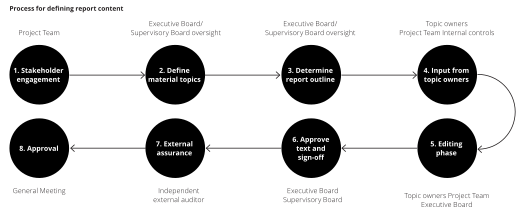
Central to our approach to reporting is the IAR Project team. This team is headed by our Chief Financial Officer and consists of representatives from Finance & Control, Finance & Accounting and Financial Planning and Analysis, combined with specialists from our businesses’ Sustainability Group and supported by Brand and Communication. Content planning and development takes place under the supervision of the Executive Board, with internal oversight by the Audit & Finance Committee and the Supervisory Board. We have engaged our independent external auditor, BDO Audit & Assurance B.V., to provide reasonable assurance on our financial statements (Annex 1) and limited assurance on our sustainability statement (Annex 2) in the PDF version of this report. The assurance report of BDO Audit & Assurance B.V. can be found in Annex 4 of the PDF. The Report is published after approval by the General Meeting.